Introduction
The Republic of the Marshall Islands lies in the central Pacific; its twenty-nine atolls and five islands—totaling over 1,200 coral islands and islets—are scattered across nearly two million square kilometers. Yet the national life of the Marshall Islands now extends farther. It reaches across the Pacific into homes, schools, hospitals, churches, and workplaces throughout the United States. Migration has changed the geography in which the country now lives.1
The scale of that transformation is visible in the population figures. The 2021 census counted 42,418 residents in the Republic of the Marshall Islands, while the RMI Embassy has estimated that, as of 2026, more than 45,000 Marshallese citizens live in the United States. The figures come from different sources and methods, but together they point to a striking reversal: the Marshallese population abroad may now exceed the population remaining in the home islands. In examining the reasons behind migration, this book centers on the human reality inside that reversal.2
Those migrations cannot be separated from the history that narrowed the choices available. Between 1946 and 1958, the United States detonated sixty-seven nuclear weapons at Bikini and Enewetak Atolls. The tests displaced communities, contaminated land, and left unresolved questions of illness, compensation, and responsibility. Climate change now places a different pressure on the same low-lying small island developing state (SIDS): rising seas, saltwater intrusion, drought, and flooding threaten homes and freshwater. Between those two crises lie the immediate conditions of daily life: limited medical care, scarce employment, expensive imported goods, and unequal access to education.3
Nuclear testing and climate change do not explain every migration in these pages, and this book does not treat Marshallese people as passive subjects of either disaster. These forces form part of the horizon against which individual decisions are made. Much of the work of absorbing their consequences has fallen on families: choosing where to seek treatment, where to raise children, how much money to send home, who will care for elders, and whether a return remains possible.
The world has often noticed the Marshall Islands most clearly at moments of catastrophe. The country’s only property on UNESCO’s World Heritage List is the Bikini Atoll Nuclear Test Site, a necessary recognition of the Cold War record; images of flooded roads and seawalls now circulate as warnings about a warming planet. Both forms of attention matter. Yet they leave a large blank space around the people who live beyond those images: the worker finishing a night shift, the parent translating a medical form, the elder remembering an outer island, the young person deciding which language to speak at home. The record of what happened to the Marshall Islands is far more visible than the ordinary lives that carry its consequences forward.4
I began this research in May 2025 in an attempt to enter that overlooked space. The purpose of this book is not to offer policy recommendations or to claim a final explanation for Marshallese migration. It focuses instead on individual perceptions: how the history of American power is understood in everyday life, how public policies settle into family memory, and how questions of health, work, land, migration, and identity are carried in ordinary speech. The value of these accounts lies precisely in preserving and articulating the uncertainty, contradiction, humor, hesitation, and meanings people attach to their own choices.
I conducted fieldwork in Majuro in July and August 2025 and in the Seattle area in March 2026. Over the course of the project, I collected 145 valid survey responses and conducted nineteen one-on-one, semi-structured interviews. Participation was voluntary, and every recorded interview took place only after the participant gave explicit consent. To protect privacy in publication, all interviewees appear under pseudonyms, and the survey tables in the appendix strip out names, contact information, and other identifying details. Quotations preserve the speakers’ phrasing with only light editorial adjustments where clarity requires them.
From the nineteen interviews, the book follows ten lives in sustained detail. The participants range in age from twenty-five to sixty-eight and differ in occupation, family history, education, and relationship to the islands. Eight are Indigenous Marshallese; two are long-term non-Marshallese residents whose years in the country offer a different vantage on social change. Eight had made long-term homes in the United States when interviewed, while two remained based in the Marshall Islands. Together, they bring the experiences of staying, leaving, circulating, and imagining return into the same field of view.
The 145 survey responses provide a wider, though still bounded, picture. Of the respondents, 111 identified as Indigenous Marshallese and thirty-three as non-Indigenous or long-term residents; one did not specify. The survey centered on physical and mental health, memories of nuclear testing, environmental change, employment and migration, and the transmission of language and culture. Its purpose was to identify recurring concerns that could add context to the individual accounts.
The project also has its limits. Oral history records how participants remember and interpret events; it alone cannot establish medical causation or prove that a policy produced a particular social change. A survey of 145 respondents cannot stand as a census of an entire nation or diaspora. Historical documents, public data, and existing scholarship therefore help place testimony in context. Where official evidence is incomplete or participants disagree, the uncertainty remains visible rather than forced into a single conclusion.
The two forms of evidence do different work. Survey responses reveal group-level patterns; interviews preserve the hesitation before an answer, the qualification added after it, and the memories through which people interpret the present. And there was no single Marshallese account of migration among them. Participants differed by age, occupation, family history, and connection to the islands. Such differences are precisely what categories like nuclear victims, migrants, displaced islanders, or future climate refugees too often flatten. These people are recorded here not because any one of them can represent the Marshallese, but because no people should be known only through the forces acting upon them.
The pages ahead move among several dimensions of Marshallese life: the inheritance of nuclear history; anticipation of climate and health risks; the movement of people for education, healthcare, and career advancement; the work of caring across distance; distinctive island traditions; local economic conditions; unique political and social structures; and cultural transmission among overseas communities. These dimensions overlap, but they do not resolve into one uniform experience. The book asks the reader to sit with that complexity before deciding what migration means.
The ocean tide sustains the islands. It has also carried the larger currents of war, policy, economics, and climate that have redirected Marshallese lives. To be at the tide’s mercy is to live with forces no individual can command. What that condition does to a people—and what it cannot take from them—can be understood only by listening to the voices carried across the Marshallese exodus. The stories that follow have not been told in full before. This book begins by making room for them to be heard.
Notes
- 1World Bank, Pacific Island Economies: Toward Efficient and Sustainable Growth, vol. 4, Marshall Islands—Country Economic Memorandum (Washington, DC: World Bank, 1993), iii, https://documents1.worldbank.org/curated/en/788491468244551072/pdf/multi0page.pdf.
- 2Economic Policy, Planning and Statistics Office and Pacific Community, Republic of the Marshall Islands 2021 Census Report, vol. 1, Basic Tables and Administrative Report (Noumea, New Caledonia: Pacific Community, 2023), 3, https://prdrse4all.spc.int/sites/default/files/marshall_islands_2021_census_vol1_table_report.pdf; Embassy of the Republic of the Marshall Islands to the United States of America, “Iakwe!,” accessed August 12, 2026, https://www.rmiembassyus.org/.
- 3Calin Georgescu, Report of the Special Rapporteur on the Implications for Human Rights of the Environmentally Sound Management and Disposal of Hazardous Substances and Wastes on His Mission to the Marshall Islands (27–30 March 2012) and the United States of America (24–27 April 2012), UN Doc. A/HRC/21/48/Add.1 (September 3, 2012), 4–12, 15–16, https://uhri.ohchr.org/Document/File/f9216204-eb78-436c-b924-9245bcdc61fc/AE50E184-4248-4AEC-897D-A00848524044; World Bank, Project Appraisal Document on a Proposed Grant to the Republic of the Marshall Islands for an RMI Urban Resilience Project, Report No. PAD4708 (Washington, DC: World Bank, April 8, 2022), 8–9, 61–62, https://documents1.worldbank.org/curated/en/285091651270771293/pdf/Marshall-Islands-RMI-Urban-Resilience-Project.pdf.
- 4UNESCO World Heritage Centre, “Marshall Islands,” accessed August 12, 2026, https://whc.unesco.org/en/statesparties/mh; UNESCO World Heritage Centre, “Bikini Atoll Nuclear Test Site,” accessed August 12, 2026, https://whc.unesco.org/en/list/1339; Kevin Hamilton and Ned O’Gorman, “Seeing Experimental Imperialism in the Nuclear Pacific,” Media+Environment 3, no. 1 (2021), https://doi.org/10.1525/001c.18496.
Ten voices
- Chapter 1Bikini Is UsREAD ↗
- Chapter 2Carving the Archipelago into a CanoeREAD ↗
- Chapter 3Too Young to Be This TiredREAD ↗
- Chapter 4Fisherman’s Canoe Ran Aground on Dry LandREAD ↗
- Chapter 5We Have EverythingREAD ↗
- Chapter 6Still on DutyREAD ↗
- Chapter 7We Keep Our CultureREAD ↗
- Chapter 8Six Years Alone at Sea: A Teen’s Daily Voyage to SchoolREAD ↗
- Chapter 9A Vantage Point Shaped by Thirty-One YearsREAD ↗
- Chapter 10The View Homeward: A Young Marshallese Technician in SeattleREAD ↗
The Marshall Islands Through 145 Survey Responses
Chapters
0Introduction
Pieced together from 145 questionnaires, this survey integrates four sets of issues we sought to examine including occupational choice, physical and mental health, island environment, and ethnic culture into a single portrait of the Marshall Islands’ present-day social reality. Our findings show that young people are attached to their homeland at heart, yet their real-life plans are full of hesitation and uncertainty; nearly half of native residents rate their own physical and mental health relatively highly, yet are broadly dissatisfied with the public healthcare system and employment benefits and they are also concerned about the potential impact of radiation on future generations; and the Marshallese language and ethnic identity remain rooted in daily life, yet respondents generally lack confidence about “how to pass Indigenous culture on to the next generation in full.”
The value of this survey lies not in offering policy recommendations, but in highlighting the multilayered judgments of Marshallese residents. This survey is a descriptive effort to capture how Marshallese residents “feel” US policy across daily life along with how they view intergenerational transmission and national identity. Our concern is not the effectiveness or fairness of the policies themselves, but how policy is embodied, remembered, and made communal. We are also looking at how policy is recurring, deforming, and recombining across decisions about language, land, occupation, and migration.
The data from these questionnaires depict the individual voices of 145 respondents and cannot be equated with the full picture of the Marshall Islands’ national population. All analyses in this chapter is anchored to the original questionnaire texts and does not force a unified stance onto the respondents. Lastly, every set of percentages is accompanied by the corresponding number of valid responses so as to avoid the cognitive bias that a single figure may introduce.
IBehind the Responses
This field survey was conducted between August 2025 and March 2026, yielding 145 valid records across the main questionnaire and its supplements, numbered 1 through 145. To standardize the statistical basis, this report regroups all responses according to the “Indigenous or not” item in the questionnaire’s background section: the 111 respondents who checked “yes” or “unsure” are classified as the Indigenous Marshallese group (native residents); the 33 respondents who checked “no” are classified as the migrant and non-native residents group; and the remaining one respondent did not provide identity information. This grouping is used solely for the present data description and does not delve into deeper differences in identity.
In terms of sample structure, the respondents skew young: of the 145 respondents, youth aged 18–39 total 94, accounting for 64.8% of the total sample—nearly three times the size of the middle-aged group aged 40–59 (31 respondents), and forming the core group of respondents; older adults over 60 number only six respondents, adolescents under 18 number 11, and a further three questionnaires left age blank.
The distribution of men and women is relatively balanced, with 71 men and 71 women (49.0% each); only three respondents selected another gender option.
As for place of birth, 107 respondents (73.8%) were born within the Republic of the Marshall Islands (RMI), and 31 were born overseas; those holding Marshallese citizenship total 125 (86.2%).
Marital status is dominated by single (71 respondents) and married (64 respondents), and those with whom respondents live day to day are mostly parents and relatives (54 respondents) or partners and spouses (40 respondents).
The three background variables of education, income, and occupation contain extensive blanks, another notable feature of the sample: 40 respondents left the household income item blank; among the identifiable income responses, 79 respondents reported an annual household income of US$30,000 or below, the majority of the valid income sample (75.24%); 34 respondents provided no valid education information; and the problem of missing occupational information is the most pronounced, with 63 questionnaires blank or filled in too vaguely to classify. The excessively high proportion of missing data means that these three categories can serve only as supplementary reference for the sample and are insufficient to fully depict the income, employment, and education profile of the entire Marshallese population. This also exposes the limitations of open-ended questionnaires in collecting socioeconomic information; accordingly, this report centers its analysis on respondents’ identity, age, and the four core issues, and will not build extended inferences on the incomplete economic background data.
It must be made clear that these 145 questionnaires constitute a non-random sample and were not drawn through stratified sampling according to the RMI national population structure. All statistical results represent only the views of the present respondents and cannot be directly extrapolated to the overall situation of all Marshallese residents. All percentages throughout the text are calculated with the number of valid responses to the corresponding item as the denominator; answers that are blank, marked with a question mark, “no view,” or a slash indicating “not applicable” are not counted in the proportion statistics, though all raw data are retained in the database. When reading each proportion, one must simultaneously cross-reference the accompanying valid sample size—for example, satisfaction with government healthcare of 36.4% is calculated on the basis of 107 valid responses, not all 145 questionnaires. This uniform statistical convention both ensures precise data description and facilitates cross-topic horizontal comparison.
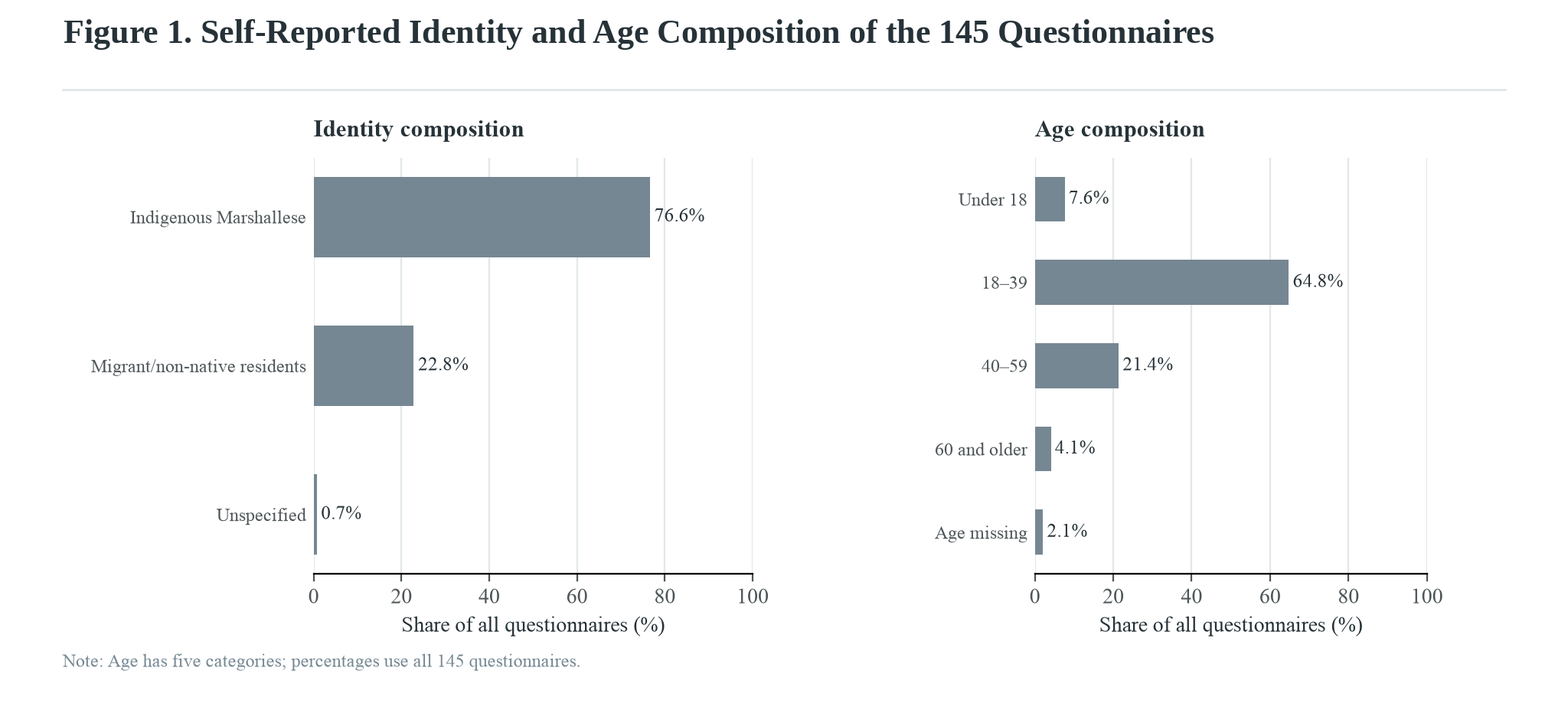
Figure 1. Self-Reported Identity and Age Composition of the 145 Questionnaires
Source: Cleaning and recalculation of the raw data from the 145 questionnaires
IIHeart on the Homeland, Path Uncertain
1. Career planning:
Among the Indigenous youth respondents aged 18–39 (74 in total), attachment to the homeland is clearly evident: 67.6% (50 respondents) would ideally like to work in the Marshall Islands, and 64.9% (48 respondents) hope to settle in their homeland over the long term—more than two-thirds of young people consistently regard the RMI as their ideal place to live and work. Yet once it comes down to concrete plans over the next five-ten years, this attachment fades markedly: only 44.6% (33 respondents) plan to continue working in their homeland, a decline of 23% relative to the ideal figure; 17.6% (13 respondents) anticipate going to the United States for work in the future, and a further 36.5% (27 respondents) have no clear destination and remain in a wait-and-see posture.
The two sets of data form a stark contrast: the youth group holds a strong emotional attachment to and living preference for the homeland, yet their real-world career plans are more cautious than their ideals. Furthermore, there is considerable uncertainty about their future life trajectories. This difference reflects a shift in distribution between ideal and reality; it merely records the current situation objectively and cannot directly establish that young people have already resolved to leave their Marshallese homeland nor can the questionnaire alone be used to infer the deeper causes behind the gap.
2. Intention to migrate:
The responses concerning the intention to migrate further corroborate this hesitation: of the 74 Indigenous youth respondents, 41.9% (31 respondents) consider it “possible / highly possible” that they will relocate to another country in the future—a proportion very close to the 44.6% who realistically plan to stay and work on the islands, sufficient to show that most young people hold an open attitude toward staying in their homeland over the long term and are far from certain about it.
At the same time, only 26.0% (19 respondents) hold an optimistic or very optimistic attitude toward local employment prospects and only 25.4% (18 respondents) are positive about career development opportunities. Thus, optimistic assessments fall far below the proportion of who “hope to stay and work on the islands.” This plainly reflects that even though young people broadly hope to continue living and working in their homeland in the future, they hold neutral or even relatively pessimistic expectations about the local employment environment and personal development opportunities. The existing questionnaire data can only confirm that this phenomenon of “high ideals, cautious expectations” objectively exists; a full account of the reasons would require in-depth interviews to supplement the interpretation.
The responses to the open-ended question “intended destination of migration” also reflect that young residents’ future plans are not yet fully defined. Of the 74 youth respondents, 54 (73%) did not fill in a specific location; only 15 explicitly wrote the United States, and the remaining five noted Japan, Guam, and other regions respectively. The United States is the foremost overseas destination explicitly mentioned by respondents, but what is more noteworthy is that over seventy percent of young people did not provide a specific destination. These data indicate that at present most young people have merely formed the idea of going elsewhere to develop, without having formed a clear, stable migration pathway; regarding their personal future development, for the most part, they remain in a stage of watching and weighing out options.
3. History of overseas travel:
History of overseas travel distinguishes “intention” from “actual experience” along yet another dimension: of all 111 Indigenous Marshallese, 64.0% (71 respondents) have never set foot outside the country and only 30% (33 respondents) have a record of overseas travel, among whom only 12 have visited three or more countries. Even though many young people are not averse to relocating overseas in the future, those who actually possess experience of overseas travel and transnational mobility remain a minority. Thus, the intention to migrate overseas in the future must not be conflated with “already having overseas experience.”
Bringing together the above information related to occupation and migration, one can see that the younger generation of Indigenous Marshallese exhibits the typical characteristics of postcolonial mobile subjects. This micro-level decision-making process between “staying” and “leaving” is not simply a matter of individual choice, but a more rational practice—an ongoing weighing between cultural belonging and economic opportunity.
It is worth noting that the problem of missing occupational data is fairly pronounced among the youth group: of the 74 samples, 38 have occupational information that is blank or unidentifiable, over half. Among the identifiable valid answers, workers in the service, retail, and food and beverage sector are the most numerous (11 respondents), followed by the government and public sector (six respondents), then comes the unemployed / homemaking group (five respondents), followed by students (four respondents), and finally technical and manual laborers (four respondents), with all other occupational categories having small numbers. Because the proportion of missing occupational information is high and the differences in numbers among the various occupational groups are slight, this portion can only depict a general overview of the occupational composition of the youth surveyed here. It cannot represent the overall youth employment structure of the Marshall Islands nor is it appropriate to infer any association between different occupations and the intention to migrate.
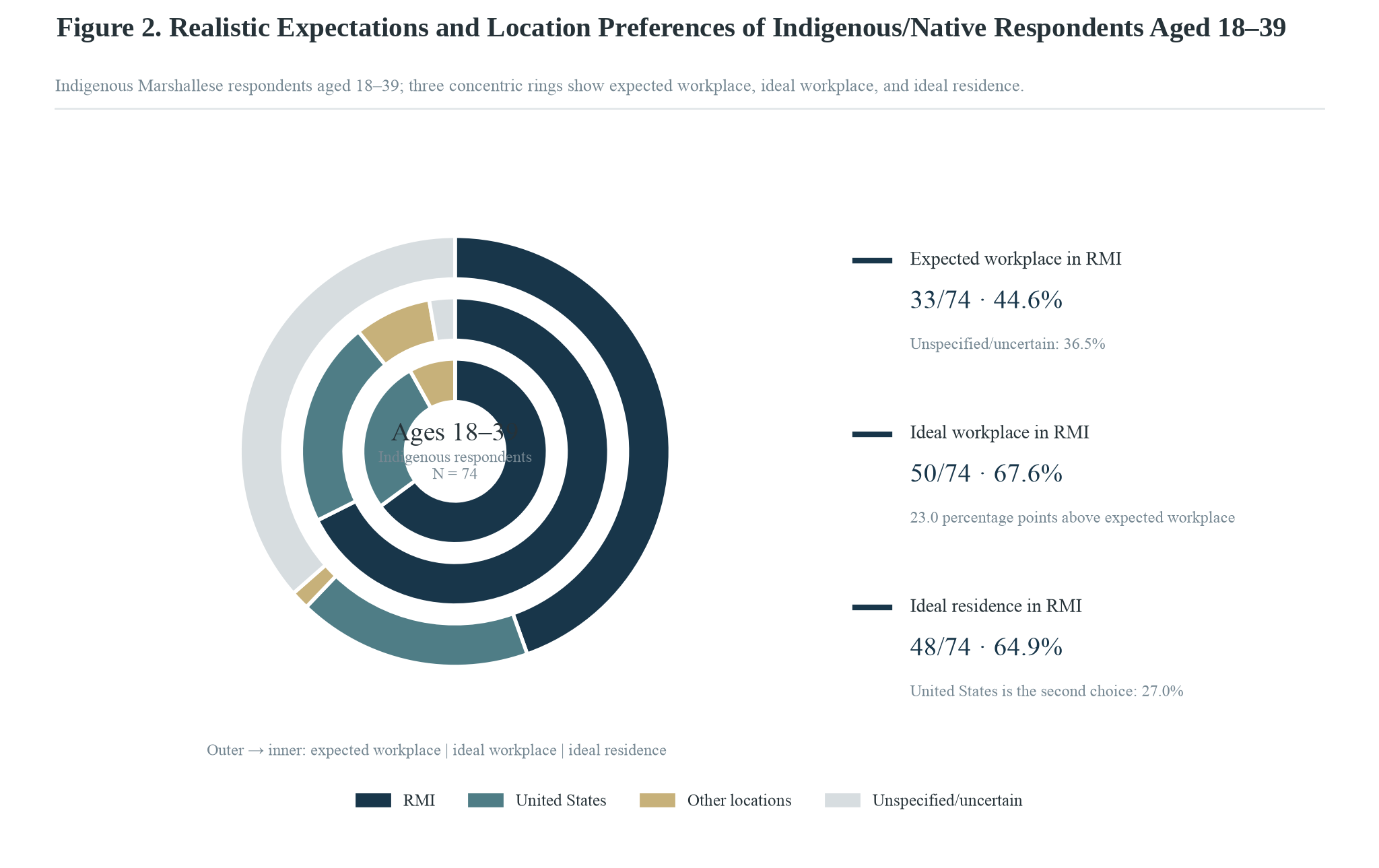
Figure 2. Realistic Expectations and Location Preferences of Indigenous/Native Respondents Aged 18–39
Source: Cleaning and recalculation of the raw data from the 145 questionnaires
IIIFair Health, Frail Care
In 1946, the United States launched the “Operation Crossroads” series of nuclear tests at Bikini Atoll, urging local residents to leave their homes; from then until 1958, the United States conducted successive rounds of nuclear testing across the Pacific trust islands (Smith-Norris, 2016). Radiation planted a profound existential hazard for generations of the Marshall Islands. Decades later, although the acute effects of nuclear radiation have weakened over time, the residual contaminated environment—and the fear of the chronic diseases and hereditary cancers it engenders—still casts a shadow over residents’ minds.
Tracing the policy trajectory, the Agreement for the Implementation of Section 177, which took effect in 1986, established a US$150 million dedicated fund and a Nuclear Claims Tribunal, setting up a compensation trust-distribution mechanism specifically for the four nuclear-affected communities of Bikini, Enewetak, Rongelap, and Utrik (Agreement for the Implementation of Section 177, 1986, arts. I–IV; U.S. General Accounting Office, 1992). Section 141 of the Compact of Free Association (COFA), signed the same year, opened a channel for eligible Marshallese citizens to reside and lawfully work in the United States (Compact of Free Association, 1986, § 141). Cross-border mobility, in theory, broadened access to diagnosis and treatment for serious illness, yet insurance barriers, language obstacles, housing difficulties, travel costs, and cumbersome administrative procedures still leave many residents unable to obtain full medical care (Duke, 2017).
These compensation and migration mechanisms are themselves deeply paradoxical: they open a gateway to external resources, yet they also embed the remediation and relief of nuclear harm within layer upon layer of institutional thresholds. The nuclear claims process requires people to translate bodily injury into standardized grievance documentation; cross-border medical referral requires assembling diagnostic certificates, appointment slips, and travel documents. On the one hand, the Agreement for the Implementation of Section 177 pledges that the fund will permanently bear the derivative harms of the “past, present, and future consequences” of nuclear testing. On the other hand, its Article VII transfers full responsibility for governing the contaminated lands to the domestic government of the Marshall Islands, while releasing the United States from the associated liability (Agreement for the Implementation of Section 177, 1986, arts. I, VII). External assistance and internal burden are here redistributed and those caught in the institutional gaps remain the ordinary families who continue to bear the erosion of their health.
Building on the above historical and institutional background, this section presents the self-rated health of the 145 respondents—spanning both physical and mental health dimensions—as well as their subjective satisfaction with the public health system and workplace health benefits along with the community and family support.
1. On the government health system and workplace health benefits:
Responses across the full sample of 145 questionnaires show that 54.4% of respondents rated their physical health as relatively good, with 28% neutral; 53% rated their mental health as good, with 24.8% neutral. In other words, 18% and 22% of respondents, respectively, considered themselves to have latent physical and mental health problems. On the other hand, regarding the environment’s influence on personal health, only 36.4% of respondents believed that the environment surrounding the RMI had a positive effect on their mental health and only 35.7% agreed that the environment was beneficial to their physical health. These several sets of data indicate that although the direct physical and mental harm caused by radiation is already weakening or attenuating, environmental problems continue to affect residents’ state of mind and radiation-related existential anxiety is widespread.
When the perspective shifts to the local public health system, the satisfaction remains far from encouraging where only 38.7% of respondents agreed that government health services could meet daily needs while 46.2% felt that the community could provide only partial health support. At the same time, only 43.4% of respondents indicated that their workplace could provide basic health benefits and the domestic workplace health-protection system likewise shows a considerable gap. The atoll regions that once bore nuclear catastrophe ought to have been equipped with a complete and adequate medical-compensation system, yet residents’ actual assessments clearly reflect a marked deficiency in the local health system.
Whether judged from the policy provisions of earlier years or from the actual data of this questionnaire and whether in the government system or the employment environment, radiation-affected residents have consistently failed to obtain adequate and effective medical compensation and medical security services. Therefore, the suffering of some groups has long been neglected and the current situation invites deep reflection.
Breaking down the data for the Indigenous Marshallese group: among 111 respondents, 51.4% (57 respondents) gave physical health a rating of 4–5, and 51.4% (56/109) likewise gave mental health such high ratings; by contrast, only 36.4% (39/107) endorsed government health services, and 40.6% (43/106) felt that workplace benefits safeguarded their health—the ratings for these two institutional protections being markedly lower than respondents’ self-rated personal health. This is the most salient feature of the Indigenous sample: residents assess their own physical and mental condition in mild and positive terms yet hold conservative or even negative views of official health care and workplace health-benefit systems, once again confirming the relatively underdeveloped state of the domestic public health system.
This contrast in evaluations must be interpreted in light of the Marshall Islands’ long-term developmental background. Through the COFA, dedicated medical assistance, referral for treatment in the United States, and referral for treatment through other channels, the United States has continuously channelled resources into the Marshallese health system, expanding local medical supply to some degree and serving as an important external support for residents’ health protection. Yet the questionnaire data demonstrates that US assistance has not been effectively translated into medical services that satisfy the population: only one-third of respondents endorsed the ability of government health care to meet actual needs and endorsement of workplace health benefits only slightly exceeded four in ten. Thus, US policy has indeed improved some public resources, but in its coverage, service capacity, and actual effect, it still falls considerably short of the standard of comprehensive protection residents envision and the population holds a strong demand for upgrading the health system.
2. On family and community support for personal health:
Compared with the two categories of institutional protection—government and workplace—family and community support for personal health received higher evaluations: 51.8% (57/110) felt that family could provide support on health matters and 47.7% (52/109) endorsed the community’s health assistance. If the six indicators—physical health, mental health, family support, community support, government health care, and workplace benefits—are examined together, family support consistently ranks first, above community support and far above official healthcare and workplace benefits. This result accords with the traditional social structure of Pacific island nations centered on kin and community: under the current shortfall in public medical provision, the family shoulders the primary caregiving responsibility while the community provides supplementary assistance. Residents’ understanding of health protection is not confined to hospitals and medical institutions but extends to a broader social network of acquaintances; it must nonetheless be noted that the warm support of family and community cannot substitute for standardized, large-scale public health services.
In addition, we also found that the migrant and non-native residents who completed Questionnaire A rated health-related items markedly higher overall than the Indigenous group: 80.8% (21/26) rated their mental health as good and 74.1% (20/27) endorsed the health-protective role of workplace benefits—both figures substantially higher than the Indigenous group (51.4% and 40.6%, respectively). Interpreting this difference, however, requires caution: the migrant group had only 26–27 valid responses per item, a relatively small sample size; moreover, factors such as the two groups’ age structure, occupational type, income level, and length of local residence were not controlled for as variables. Therefore, the data can only demonstrate the existence of evaluation differences within this sample and cannot be used to infer long-term, stable cognitive differences between native residents and outside groups.
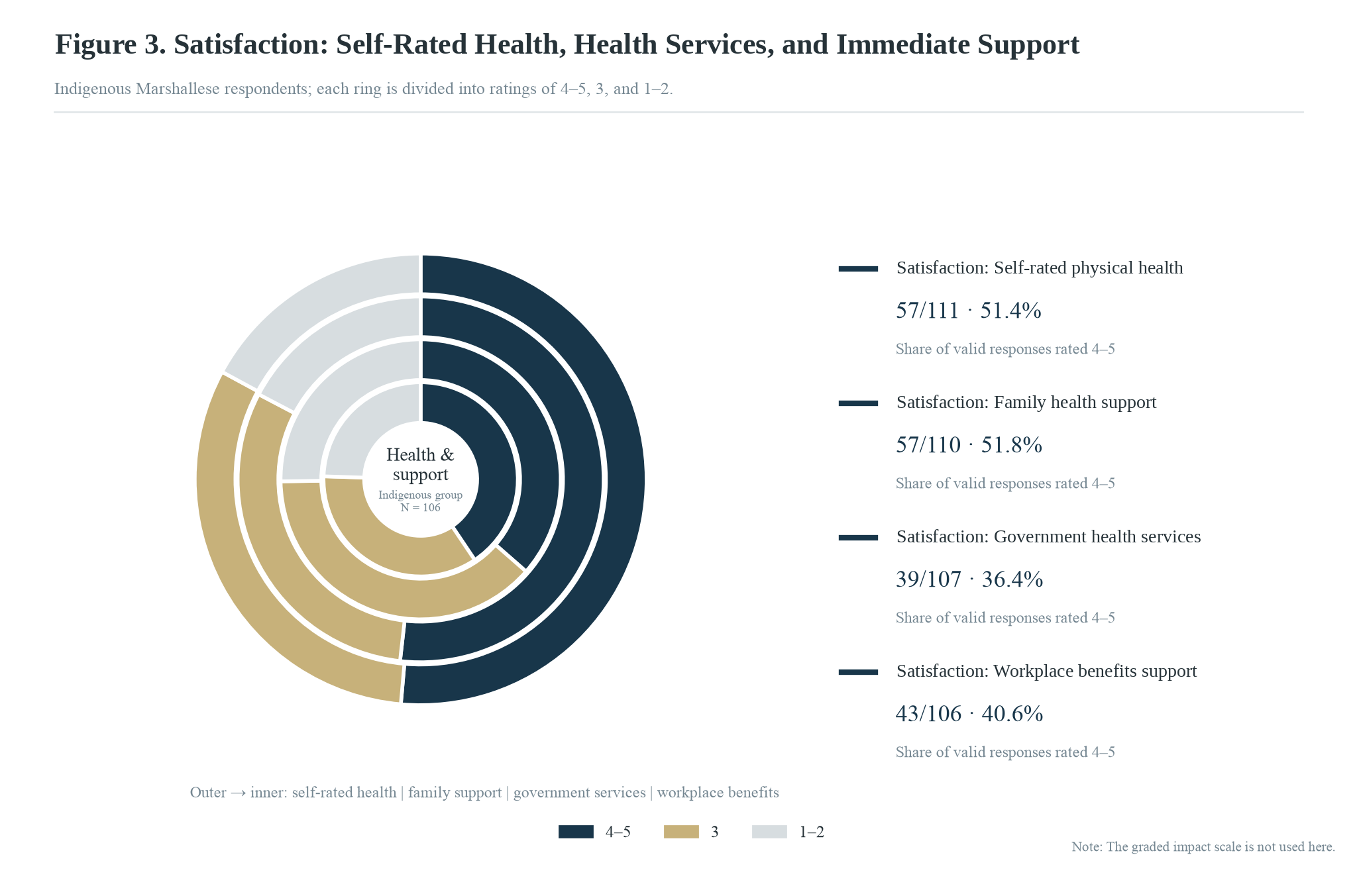
Figure 3. Self-Rated Health, Satisfaction on Health Services, and Satisfaction on Immediate Support among the Indigenous/Native Group
Source: Cleaning and recalculation of the raw data from the 145 questionnaires
IVHarm Across Generations
The items concerning environmental and nuclear-testing impacts used a graded impact scale rather than a conventional “agree/disagree” scale: ratings of 1–2 mark the negative-impact end, a rating of 3 is neutral or “no impact,” and ratings of 4–5 mark the positive-impact end. The high proportions of 4–5 ratings mentioned below represent only that respondents leaned more toward endorsing the descriptions on the right side of the scale and cannot be directly equated with “judging the nuclear harm to be extremely severe”. Likewise, ratings of 1–2 should not be simply understood as the population “denying the harm of nuclear testing and environmental legacy.” Making this convention explicit is very important because only by accurately grasping the logic of the scale can one objectively compare respondents’ differing perceptions across the four dimensions of impact on the individual, the family, the community, and future generations.
1. Perception of intergenerational impact:
The questionnaire data shows that native Marshallese hold a distinct “intergenerational turn” in their perception of the impact of nuclear testing. In the responses of the Indigenous group, the most salient finding is not people’s judgment of their own current health, but the majority’s anxiety that later generations will inherit the residual nuclear risk. The item “nuclear-related impacts will extend to future generations” received a total of 102 valid responses, of which 61.8% (63 respondents) chose ratings of 4–5, 18.6% (19 respondents) were neutral, and only 19.6% (20 respondents) believed there was no long-term intergenerational harm. In comparison, for “the impact of nuclear testing on personal health up to the present,” the proportion choosing ratings of 4–5 was 46.5%, 15.3 percentage points lower than for the intergenerational-risk item.
The gap between these two sets of data is not a denial of one’s own suffering, but a characteristic collectivist conception of time: harm is not merely a present symptom, but a continuous event embedded in bloodline and the fate of the ethnic group. Residents’ understanding of the impact of nuclear testing is not confined to whether they themselves are currently ill or physically unwell but extends across time—viewing it as a long-term existential hazard affecting their children and descendants.
This intergenerational cognition carries crucial practical significance: the United States’ conduct of nuclear testing in the Marshall Islands has become one of the most historically enduring policy issues in the two countries’ relationship. And the questionnaire results show that this history will not end with the conclusion of nuclear testing; the population persistently binds the question of “whether future generations will be affected” and the safety of the family’s survival to that era’s nuclear policy. The present questionnaire cannot directly demonstrate, at the medical level, a mechanism of intergenerational pathological change from radiation nor can it directly demonstrate the causal source of health damage. But it clearly records a persistent social consensus: for a large number of respondents, US nuclear testing is not a historical event sealed in the past but a present-day problem that continues to threaten the safety of later generations, still linked to descendants’ health, family responsibility, and the safety of future life.
The importance of this set of data lies not only in the figure of 61.8% itself, but more in its exposure of the pronounced “long-term” and “intergenerational” characteristics of nuclear legacy harm. Likewise, the in-depth interviews closely interlink the exploration of family memory related to nuclear testing, risk to later generations, cross-border relocation, and compensation issues, providing a further narrative background for this intergenerational risk consciousness.
2. Judgment of one’s own health:
Unlike the judgment of intergenerational risk, respondents’ judgments of the nuclear impact on their own physical and mental health show marked divergence: “the impact of the environment and nuclear testing on the mind” had 103 valid responses, of which 37.9% (39 respondents) chose ratings of 4–5, 27.2% (28 respondents) were neutral, and 35.0% (36 respondents) chose ratings of 1–2. Here, the three intervals are evenly distributed in numbers, with positive and negative evaluations differing by only 2.9 percentage points, indicating that respondents had not formed a unified perception on the question of impact on mental health. Likewise, the data trend for “the impact of the environment and nuclear testing on physical health” was similar, with the three intervals evenly distributed and the proportion of ratings of 4–5 at 38.6%.
This forms a sharp contrast with the highly unified intergenerational concern: respondents diverge considerably on whether nuclear testing affects their own current physical and mental state yet collectively affirm that the risk will be transmitted to the next generation. It can thus be seen that, in the population’s mind, nuclear legacy risk is first and foremost a long-term hazard facing their descendants, thereby revealing a sense of uncertainty about long-term consequences and an intergenerational concern rather than a unified present-day experience of personal suffering. In the Marshall Islands, nuclear catastrophe has long transcended the individual life cycle and become a continuous, long-term risk running through the generations of the family.
Moreover, because evaluations of personal physical and mental state are confounded by multiple factors such as age, place of residence, family history of nuclear exposure, and current health condition, the answers we aggregated are naturally dispersed. But the impact on “future generations” is a macro-level, long-range collective judgment. Even if respondents themselves feel no illness, they generally believe that the historical harm has not yet fully ended. Although the questionnaire data does not go further to determine which specific factors give rise to these differences, it can clearly confirm one point: the Indigenous sample’s degree of concern about risk to later generations is far higher than its perception of present-day personal physical and mental damage.
This conclusion lifts the nuclear-testing issue out of the purely medical domain and elevates it into a public issue concerning historical responsibility, protection of later generations, and long-term risk governance. In evaluating the relevant US policies, we cannot examine only short-term compensation and medical assistance but must further attend to whether the cross-generational risk in the population’s mind has been fully and properly addressed.
3. Environment and public governance:
Environmental impact also continues to permeate community relations, the sense of cultural belonging, and public decision-making: 65.8% (73/111) agreed that “I have a responsibility to protect the island environment,” the highest proportion of positive endorsement in this chapter. This shows that the overwhelming majority of Indigenous respondents do not push environmental governance entirely onto the government and external agencies but actively acknowledge the environmental responsibility borne by individuals and communities.
Yet a strong sense of responsibility does not mean that respondents believe they can participate effectively in environmental governance: 47.7% (52/109) felt frustrated at being unable to influence environmental policy, 45.5% (50/110) reported that the community had become divided over environmental issues, and 42.7% (47/110) felt that unwelcome environmental change had weakened their own sense of cultural belonging. This set of data forms a clear structure of contradiction: respondents hold a strong inner sense of environmental responsibility yet nearly half have no sense of participation in public decision-making, accompanied by negative feelings of community division and a weakening sense of identity and belonging.
This gap of “responsibility without power” extends the environmental issue from natural ecology and health risk further into the contradictions of public governance. What respondents care about is not only how the island environment changes, but even more so their voice, whether community opinion can be adopted, and how external policy affects local life. Against the background of the Marshall Islands’ long-term policy entanglement with the United States, the nuclear legacy, environmental governance, compensation distribution, and the allocation of related public resources may all be evaluated by the population within a framework of rights, responsibilities, and opportunities for participation. However, the present questionnaire can only confirm that a sense of responsibility and a sense of powerlessness coexist. It cannot yet determine which level of government, which specific US policy or which environmental decision respondents’ dissatisfaction is directed at. Therefore, no further causal attribution should be made.
4. Attitudes of different groups:
A horizontal comparison of the data for the Indigenous native group and the local migrant group shows that the two categories of respondents view the impact of radiation and environmental issues from starkly different perspectives: on the two items “the impact of nuclear testing on the mind and on the body,” the migrant and non-native residents both had a 4–5 rating proportion of 61.9%, substantially higher than the Indigenous group’s 37.9% and 38.6%. On the item “the positive impact of the nuclear legacy issue on community and cultural pride,” the migrant group stood at 71.4% versus only 50.0% for the Indigenous group; migrant respondents who agreed that “radiation risk will extend to future generations” reached as high as 83.3%, compared with 61.8% for the Indigenous group. Only on the item “the impact of nuclear testing on personal health” was the Indigenous group’s proportion of 4–5 “strongly agree” ratings, at 46.5%, higher than the migrant group’s 35.3%.
From these group differences, a fairly clear observational conclusion can be distilled: native residents are accustomed to binding nuclear-related questions to themselves, their families, and native historical experience whereas migrants and outsiders judge more from the perspective of the social environment, community relations, and long-term intergenerational risk. But this interpretation is only a reasonable conjecture that the questionnaire data cannot directly corroborate; the migrant group had only 16–22 valid responses per item and the two groups’ age, income, length of residence, and questionnaire-completion path were not controlled for as variables. As such, the charts reflect only the differences in responses within this sample and cannot represent stable attitudinal differences between all native residents and all outside residents.
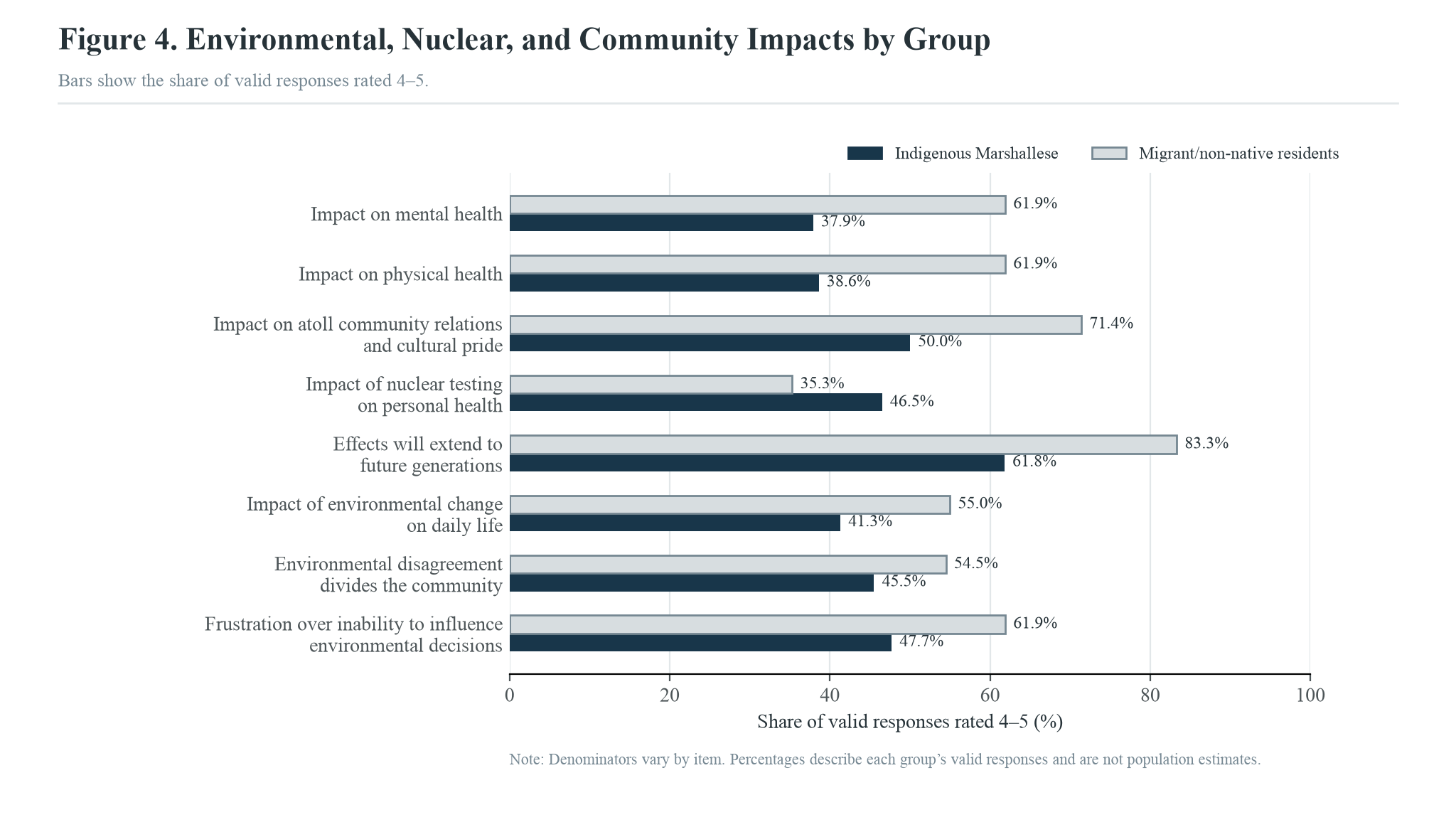
Figure 4. Environment, Nuclear Impact, and Community Judgment: Indigenous/Native Group and Migrant/Non-Native Residents Group
Source: Cleaning and recalculation of the raw data from the 145 questionnaires
VMiddle-Aged Group
1. Differences in perception between the middle-aged and younger groups
If the responses of the Indigenous Marshallese group are disaggregated by age band, then across all items relating to the environment and the nuclear legacy, the proportion of the 40–59 middle-aged group giving ratings of 4–5 is uniformly higher than that of the 18–39 younger group.
- Strong agreement that “nuclear testing still affects personal health today”: middle-aged 65.0% (13/20), younger 40.0% (26/65)—a difference of 25 percentage points;
- Strong agreement that “the associated impacts will extend to future generations”: middle-aged 76.2% (16/21), younger 59.7% (40/67);
- Strong agreement that “environmental change disrupts daily life”: middle-aged 72.7% (16/22), younger 32.4% (22/68)—a gap of as much as 40.3 percentage points.
The trend across all three indicators is entirely consistent: middle-aged respondents show a higher overall intensity of perception regarding the nuclear-contamination legacy and long-term environmental risk. It must be stressed that ratings of 4–5 on the scale represent only a leaning toward agreement with the positive-direction statement and cannot be directly equated with the impact having reached some objective threshold.
A cross-comparison of these three indicators reveals that the 40–59 middle-aged group maintains figures above 65% on all three, with a highly consistent response logic. The 18–39 younger group, by contrast, shows considerable volatility, spanning 40%, 59.7%, and 32.4%. This indicates that middle-aged respondents make stable and coherent judgments about environmental risk, viewing the nuclear-legacy problem simultaneously along three dimensions—personal health, the safety of future generations, and everyday livelihood. Conversely, younger respondents, although most acknowledge that the effects of radiation will extend to future generations, perceive the impact on their own health and daily life more mildly. Thus, the two generations differ naturally in their focus of concern. This conclusion records only differences in the distribution of responses across age bands and is not directly equivalent to differences in the two generations’ actual experiences or health status.
Figure 5 further reveals that this difference in risk perception does not conflict with self-assessed health. The proportion of the 40–59 middle-aged group rating their physical health as good is as high as 63.6%, higher than the younger group’s 47.3%. At the same time, they are also the group with the highest proportion believing that nuclear testing affects themselves, their descendants, and their daily life. This sample data demonstrates that optimistic self-rated health and a high degree of vigilance toward environmental risk are not contradictory. In other words, the 40–59 group is not more concerned about environmental issues because they consider their own health poor. On the contrary, they maintain a relatively positive assessment of their own health while at the same time paying greater attention to the potential long-term effects of nuclear testing and environmental change. Environmental-risk perception and self-rated health are two mutually independent dimensions of subjective evaluation, with no simple linear correspondence between them.
2. Further interpretation of the data:
This finding offers a new perspective for interpreting the long-term impact of US policy. From the descriptive-statistical results, the influence of US nuclear-testing policy in the sample does not remain merely at the level of a historical event, but is expressed more as differing understandings of long-term environmental risk across age groups; the so-called “impact” is not equivalent to physiological disease, but rather an internalization of risk awareness.
The earlier discussion established that the public broadly worries about the intergenerational transmission of radiation risk and the age-stratified data further point out that this long-term risk awareness is most pronounced among 40–59 middle-aged respondents. The historical impact of US nuclear testing does not fade with time; rather, in accordance with age and life experience, it forms perceptions of varying weight in the minds of different generations. As the mainstay group that inherits history and raises the next generation, middle-aged people have the most complete cognition of the ongoing harm of the nuclear legacy. However, the existing data can only confirm that differences exist in responses across age bands and cannot further explain whether these differences originate from formative experiences, family caregiving responsibilities, atoll of residence, or some other factor. Thus, no further inference about the generating mechanism should be drawn.
It should be noted that only four Indigenous respondents aged 60 and above are included, so Indigenous elders did not fully enter the scope of the questionnaire. Because this group’s sample size is extremely small, a change of a single person would produce a dramatic swing of 25% and the statistical result is highly susceptible to interference from any single individual. Figure 5 therefore retains the elderly group only to present the sample structure completely and to facilitate readers’ cross-comparison; the main text will not rely on this age group’s scant data to generalize about the overall attitudes of the elderly.
At the same time, the questionnaire did not fully collect information on family radiation-exposure history, atoll of usual residence, chronic illness, family caregiving responsibilities, and the like. The focus of this chapter is to reveal the age-distribution characteristics presented by the descriptive statistics, not to establish a causal relationship between age and environmental-risk perception.
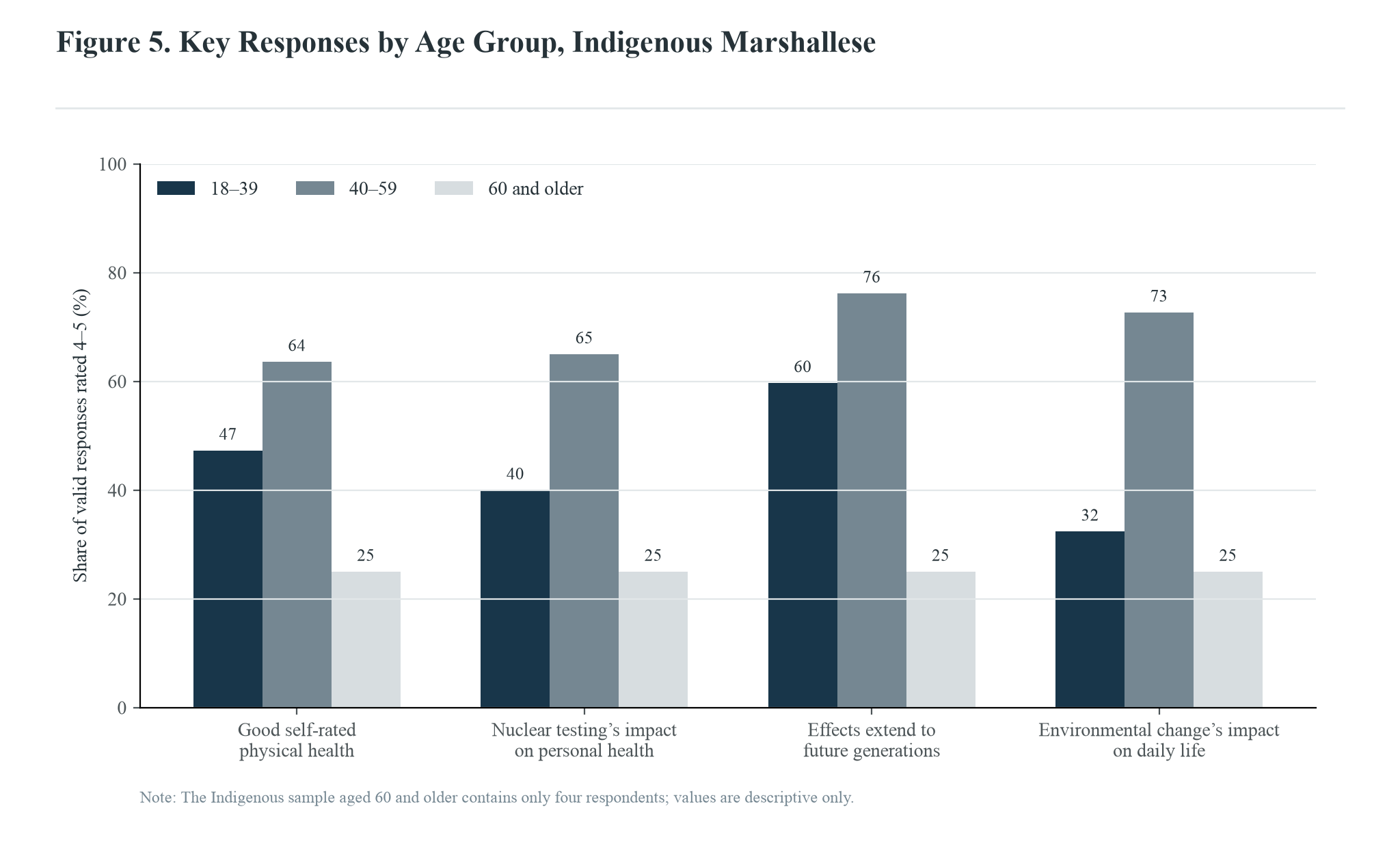
Figure 5. Key Responses by Age Band, Indigenous Marshallese Group
Source: Cleaning and recalculation of the raw data from the 145 questionnaires
VICultural Continuity and its Challenges
1. A high degree of cultural identity:
This survey shows that Marshallese respondents exhibit a high degree of consistency on items relating to cultural identity:
- 66.7% (72/108) clearly recognize their own Marshallese ethnic identity;
- 66.1% (72/109) have a strong sense of cultural belonging;
- 66.1% (72/109) use the Marshallese language every day;
- 65.7% (71/108) take pride in their Marshallese identity.
All four indicators are stably fixed at around two-thirds, with differences of less than one percentage point, indicating that within this survey sample, mother-tongue use, sense of belonging, and cultural pride are tightly bound together. This data clearly shows that even as globalization and transnational mobility continue to intensify, Marshallese culture has not become detached from ordinary people’s daily lives. In fact, most respondents still hold fast to the Marshallese language and their ethnic identity, and the cultural foundation remains solid.
2. Cultural transmission faces challenges:
However, when the question shifts from “whether one identifies with one’s own culture” to “how to carry the culture forward,” the optimism of the responses drops markedly: only 55.6% (60/108) believe they clearly know how to pass Indigenous culture on to the next generation—a decline of ten percentage points relative to the identity figures; 50.5% (55/109) of respondents believe overseas Marshallese communities can maintain traditional culture; and 52.9% (55/104) agree that Marshallese culture is under external pressure and threat.
Viewing these items together reveals a fairly clear trend: the public’s present-day sense of cultural belonging remains generally strong, but when it comes to cultural transmission, cultural continuity, and the cultural maintenance of overseas ethnic communities, respondents’ assessments are noticeably more cautious and conservative. This means that for most respondents, “I am Marshallese” and “I am able to continuously transmit Marshallese culture” are not entirely the same question—identity is stable and unchanging, whereas cultural transmission faces greater real-world challenges.
The cultural question thus divides into two levels: “identity” describes the present state while “intergenerational transmission” anticipates the future trajectory. “Cultural identity” is easy; “cultural practice” is hard, the latter being fraught with uncertainty owing to continuing outward population movement, American culture, and internet social media. Although this chapter’s data cannot further explain the specific drivers of the transmission difficulty, they suffice to confirm that compared with a solid self-identity, cultural continuity is the more pressing problem in people’s minds.
This result has some heuristic significance for understanding the long-term impact of US policy toward the Marshall Islands. Over a long period, through educational, medical, and fiscal assistance under institutional arrangements such as COFA, the United States opened channels of mobility linking the Marshallese with the United States and the wider overseas world and consequently, the Marshallese population has migrated transnationally on a large scale. The core tension of cultural preservation has shifted from “whether the public affirms Indigenous culture” to “how to carry tradition forward within an ethnic community dispersed across the globe.” The questionnaire data confirms that the foundation of cultural identity remains intact, but that the public lacks confidence in long-term transmission. It also reveals that in reality, the continuous movement of population and the pressure of upholding cultural transmission is connected. This paper, however, makes no single causal determination; the survey results cannot directly prove that this change is caused entirely by US policy.
3. US support helps protect Marshallese culture:
Interestingly, on the question of whether US support helps protect Marshallese culture, Indigenous respondents gave an overall positive assessment: 56.8% (63/111) affirm that US support can aid the protection of Marshallese culture, 26.1% are neutral, and only 17.1% hold a negative view. Respondents affirming external support clearly outnumber those questioning it and the public’s evaluation of the impact of US support on Indigenous culture is not black-and-white.
Two seemingly contradictory sets of data are in fact logically self-consistent: the public simultaneously acknowledges that Indigenous culture is under pressure and affirms that the support provided by the United States in various respects has a positive effect on cultural transmission. This reflects a complex and multifaceted real mindset: external resources do indeed serve as a buffer but are insufficient to fully dispel the long-term pressure on cultural transmission. Thus, the impact of US policy on Indigenous culture entails both benefits and harms and cannot be characterized in a single way.
4. Obstacles to collecting traditional-culture data:
The survey data on clan (Clan) affiliation starkly expose the real-world obstacles facing the statistical collection of traditional culture: of 111 Indigenous respondents, only 57 were able to complete and identify their own clan, while 54 left the item blank or filled it in so vaguely as to be unidentifiable. Although the clan data cannot form a reliable statistical result, the phenomenon itself also shows that the standardized collection of traditional-culture information in field research is highly difficult, and that deeper interviews and ethnographic material are needed to make up for the data shortfall.
Because the data are insufficiently complete, and because the open-ended entries contain spelling variations and inconsistent transcription, it is impossible to accurately compute the actual distribution of respondents across different clans. This chapter therefore does not undertake an analysis of clan structure and confines its discussion to four standardized indicators: language, identity, cultural practice, and cultural transmission.
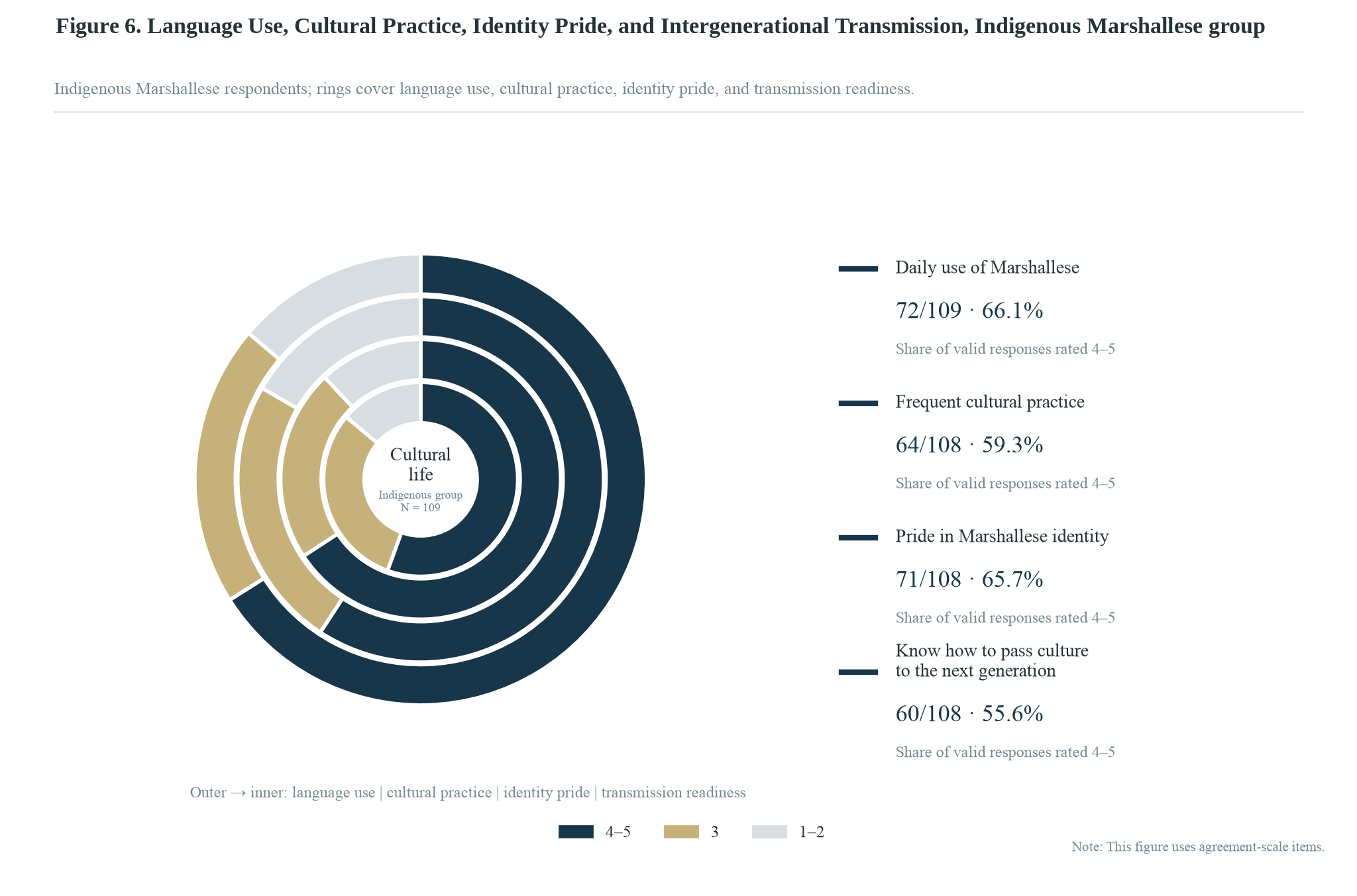
Figure 6. Language Use, Cultural Practice, Identity Pride, and Intergenerational Transmission, Indigenous Marshallese group
Source: Cleaning and recalculation of the raw data from the 145 questionnaires
VIILong-Settled Migrants
For several decades, the COFA, educational cooperation, cross-border medical care, and bilateral economic exchange have opened channels for the movement of people between the Marshall Islands and overseas, attracting a portion of non-native residents to live here over the long term. Among the 145 records of the accompanying Part B, all 33 respondents self-reporting as migrants or non-native residents are included in this group’s analysis. According to the length of local residence entered in the open-ended item: eight have resided continuously in the Marshall Islands for 11–20 years, accounting for 24.2% of the migrant sample; five each have resided for less than one year and for one–five years, each accounting for 15.2%; four each have resided for six–ten years and for 21 years or more; and seven did not report a length of residence.
Overall, the Part B sample consists not of short-term sojourning visitors but of a group of non-native residents who have already worked, lived, and integrated into local society in the Marshall Islands over the long term. The data in this chapter therefore reflect the observational vantage point of long-settled residents on Marshallese society rather than the partial impressions of short-term outside visitors. It should be pointed out that length of residence represents only the duration of one’s stay in the Marshall Islands and cannot be directly equated with the depth of cultural integration or the strength of identity.
1. Overall impressions of indigenous culture:
Feedback on the culture-related items shows that non-native residents long settled in the Marshall Islands give an overall positive assessment of Marshallese culture: 60.0% (15/25) believe Indigenous traditions are well preserved and an equal proportion affirm that Indigenous culture has continued to strengthen in recent years. Further, as many as 84.0% (21/25) agree that Marshallese culture possesses a unified and continuous, complete thread—the highest proportion of any cultural item. In addition, 56.0% of respondents regularly participate in community public activities and 68.0% are willing to continue learning and taking part in the Marshallese language and traditional customs.
Taken together, the data show that long-settled residents not only acknowledge that Marshallese culture genuinely exists, but also broadly affirm its strong continuity and complete vitality. The high affirmation rate of 84% indicates that, in the eyes of non-native residents living locally over the long term, modernization and transnational population movement have not severed the overall thread of Marshallese culture. On the contrary, they generally believe that traditional culture still maintains fairly good stability.
Comparing this with the responses of Indigenous residents discussed earlier, we can see that the two groups’ foci of concern differ entirely: Indigenous residents, standing in the position of holders and transmitters of the culture, focus on the culture’s future development. They worry about whether the next generation can safeguard tradition and whether the culture will move toward extinction whereas long-settled outsiders, from the vantage point of external observers and community participants, more often affirm the culture’s present-day completeness and stability, offering an evaluation of the culture’s overall state. There is no contradiction between the two groups’ conclusions; they merely represent differing observations of the same question by different social roles. Differing points of emphasis do not mean that two opposing facts about the cultural present exist.
2. A fairly strong intention to stay:
The intention-to-stay data present a stratified feature: of 26 valid responses, 50.0% (13) gave ratings of 4–5, clearly expressing a strong intention to stay on the islands; if respondents giving a neutral rating of 3 are included, a combined 80.8% fall within the 3–5 range, and only 19.2% (5) lean toward leaving. The two counting conventions convey different information: looking solely at the high-rating range, only half of the non-native residents are firmly committed to remaining long term. Therefore, once the neutral attitude is included, more than eighty percent of the non-native settlers have no clear plan to leave the islands. Presenting both levels of data together therefore fully restores the mild, wavering true mindset of long-settled residents, avoiding the one-sided interpretation that a single “retention rate” would bring. From the data, most long-term residents hold an open or positive attitude toward continuing to stay in the RMI, while those who truly express a very clear intention to stay account for about half.
The reasons for relocating entered in the open-ended item further reveal that non-native residents’ rootedness in the Marshall Islands results from multiple factors acting together: work and economic opportunity were each listed by seven people as the primary reason, family reunification and following relatives by six, social services by two, and the remainder were native-born or did not state a reason. Open-ended questions typically record only what respondents regard as the single most important motivation and do not imply that the relocation decision was influenced by a single reason alone. Employment, the economy, and family are the three core pillars supporting non-native residents’ long-term settlement in the Marshall Islands; transnational settlement behavior is the result of multiple real-world needs layered together, not a simple, single population-movement phenomenon.
The views of these long-term residents are an indispensable part of understanding change in Marshallese society. This survey’s data prove that this group of long-settled residents broadly accepts Indigenous culture and holds a mild, positive intention to stay on the islands. They are neither short-term migrants in the traditional sense nor the same as Indigenous Marshallese; they are an important group for observing change in Marshallese society. Their responses reflect more an evaluation of the culture’s overall state, community life, and future choices about staying rather than a discussion centered on the history of nuclear testing or ethnic identity—clearly different from the focus of concern of Indigenous Marshallese. Notably, the migrant and non-native residents’ evaluation of the RMI’s cultural continuity is on the whole higher than that of Indigenous residents. Yet this does not mean they see something Indigenous residents cannot but rather that they are more inclined to observe from an “overall impression.” This comparison reveals two different “ways of feeling the nation.”
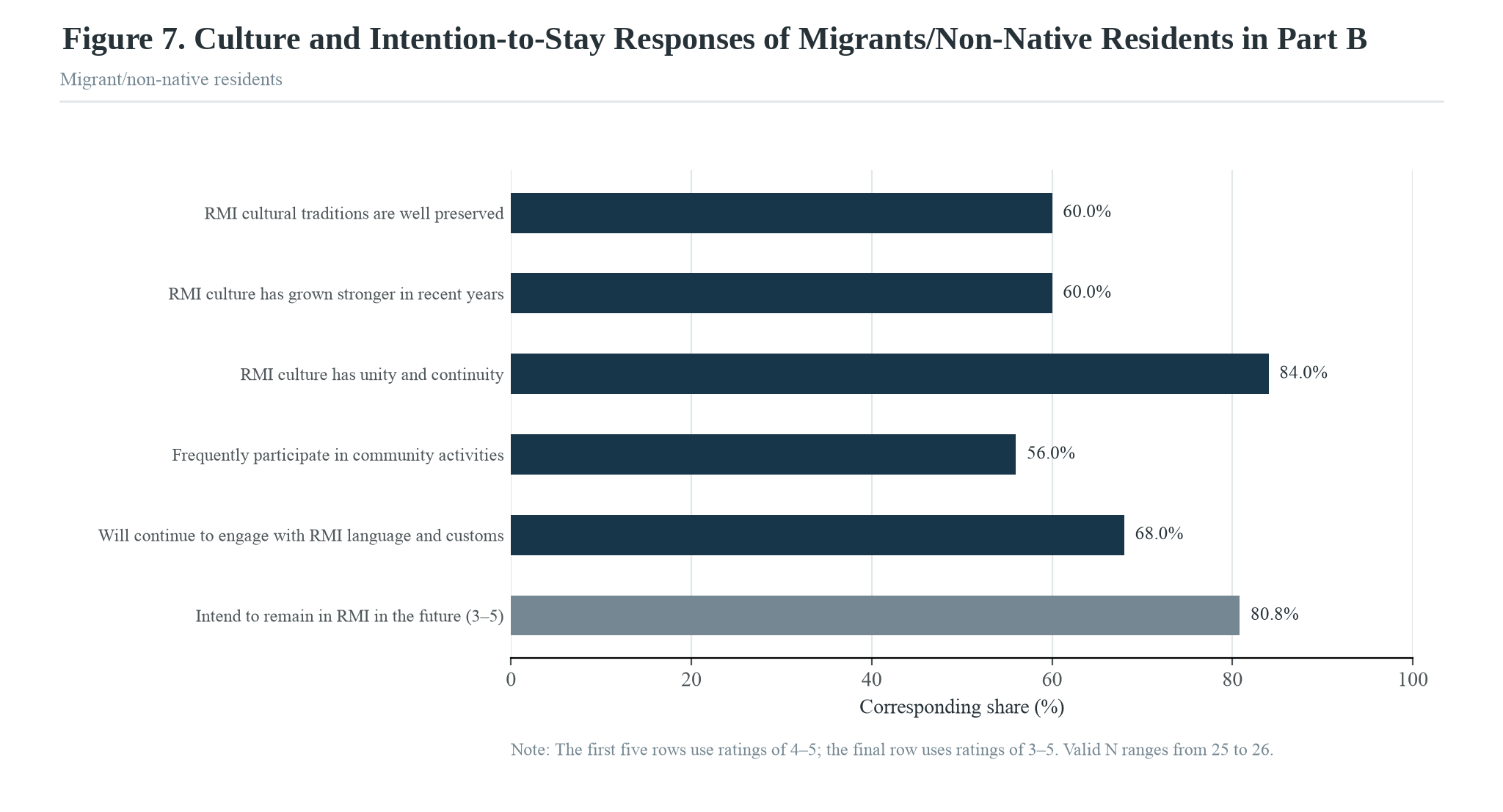
Figure 7. Culture and Intention-to-Stay Responses of Migrants/Non-Native Residents in Part B
Source: Cleaning and recalculation of the raw data from the 145 questionnaires
VIIICognitive Differences Across Groups
To further understand differences in how various social groups perceive health, environmental, and cultural issues, this section provides a grouped descriptive comparison along three dimensions: gender, level of education, and household income. All percentages are calculated using the number of valid responses to the corresponding question as the denominator, without controlling for other variables such as age, occupation, or area of residence. This section therefore only objectively describes the features of the response distributions across groups. It neither infers the specific causes of these differences nor implies that stable cognitive differences exist across social groups at the national level.
1. Gender perspective:
Among Indigenous Marshallese women (native residents), the proportion giving positive ratings of 4–5 was consistently higher than among men across several core questions:
- Self-rated mental health: women 61.4% (35/57), men 40.0% (20/50);
- “Feeling frustrated at being unable to influence environmental decisions”: women 56.1% (32/57), men 38.0% (19/50);
- “Knowing clearly how to transmit culture to the next generation”: women 69.6% (39/56), men 40.0% (20/50), a difference of nearly 30 percentage points.
These three indicators pertain, respectively, to three different domains—mental health, participation in public governance, and intergenerational cultural transmission—and in each case the proportion of positive evaluations was higher among women than among men. This suggests that, within the present sample, women responded more actively to public-affairs issues such as community matters and cultural continuity. However, this difference merely records the current state of the sample as the questionnaire did not further collect background information such as the division of household care work, frequency of community participation or the traditional division of social roles. Therefore, no deeper analysis can be made.
2. Education perspective:
Groups with different levels of education showed no uniform pattern of variation in their evaluations but displayed entirely opposite characteristics across different issues. Among the highly educated group (junior college and above), the proportion taking pride in being Marshallese was 86.2% (25/29), markedly higher than the 72.5% (37/51) among the group with a high-school education or below. This indicates that a higher level of education did not weaken ethnic (Marshallese) identity but rather reinforced cultural pride. However, on the question of whether “government health services meet needs,” only 35.7% (10/28) of those with junior college and above expressed approval, lower than the 46.0% (23/50) among those with a high-school education or below.
Taking the two sets of figures together, one can see that a sense of cultural identity and the evaluation of public services do not rise and fall in tandem. Highly educated individuals, on the one hand, firmly maintain their ethnic identity while on the other hand, they hold the official health service system to higher standards and evaluate it more cautiously. This shows that the level of education influences where people place the emphasis in evaluating different issues without producing a uniformly positive or uniformly negative attitude across the board.
3. Household income perspective:
The most pronounced difference among the income groups appeared in perceptions of intergenerational nuclear risk: the high-income group with an annual household income above US$30,000 comprised of only 15 respondents, of whom as many as 93.3% (14/15) agreed that impacts related to the nuclear legacy would be transmitted to future generations. Yet the low-income group with an annual income of US$30,000 or below comprised of 52 respondents showed an agreement proportion of 67.3% (35/52). The two groups differed by 26 percentage points, the largest difference of any grouped comparison in this section.
The sample results show that the high-income group’s perception of long-term, cross-generational environmental risk was more uniform and more intense. Interpretation must nevertheless remain cautious: the high-income sample was comprised of only 15 responses while the low-income valid sample was comprised of 52 responses, a substantial difference in sample size. In addition, 37 Indigenous respondents left their income information blank. This proportion represents only a feature internal to the present sample and cannot support the general conclusion that “the higher the income, the greater the concern for future-generation risk,” nor can income level be directly judged to be the cause of this difference.
Taking the three sets of stratified data—gender, education, and income—together, one can see that the social changes brought to the Marshall Islands by long-term US policy have formed entirely different focal points of perception in the minds of different populations. Women gave higher evaluations in areas such as intergenerational cultural transmission, community participation, and mental health; the highly educated group had stronger cultural and identity attachment but lower evaluations of public health care; and the high-income group placed the greatest emphasis on the long-term harm of the nuclear legacy to future generations.
This shows that the impact of long-term US policy is perceived somewhat differently across different social groups, and that each person’s evaluative criteria are shaped by their own age, social role, economic circumstances, and life experiences. This section consists entirely of univariate descriptive statistics and does not screen out other confounding factors. Thus, group differences serve only as observational leads for in-depth individual interviews and ethnographic analysis and no causal relationships among variables are inferred.
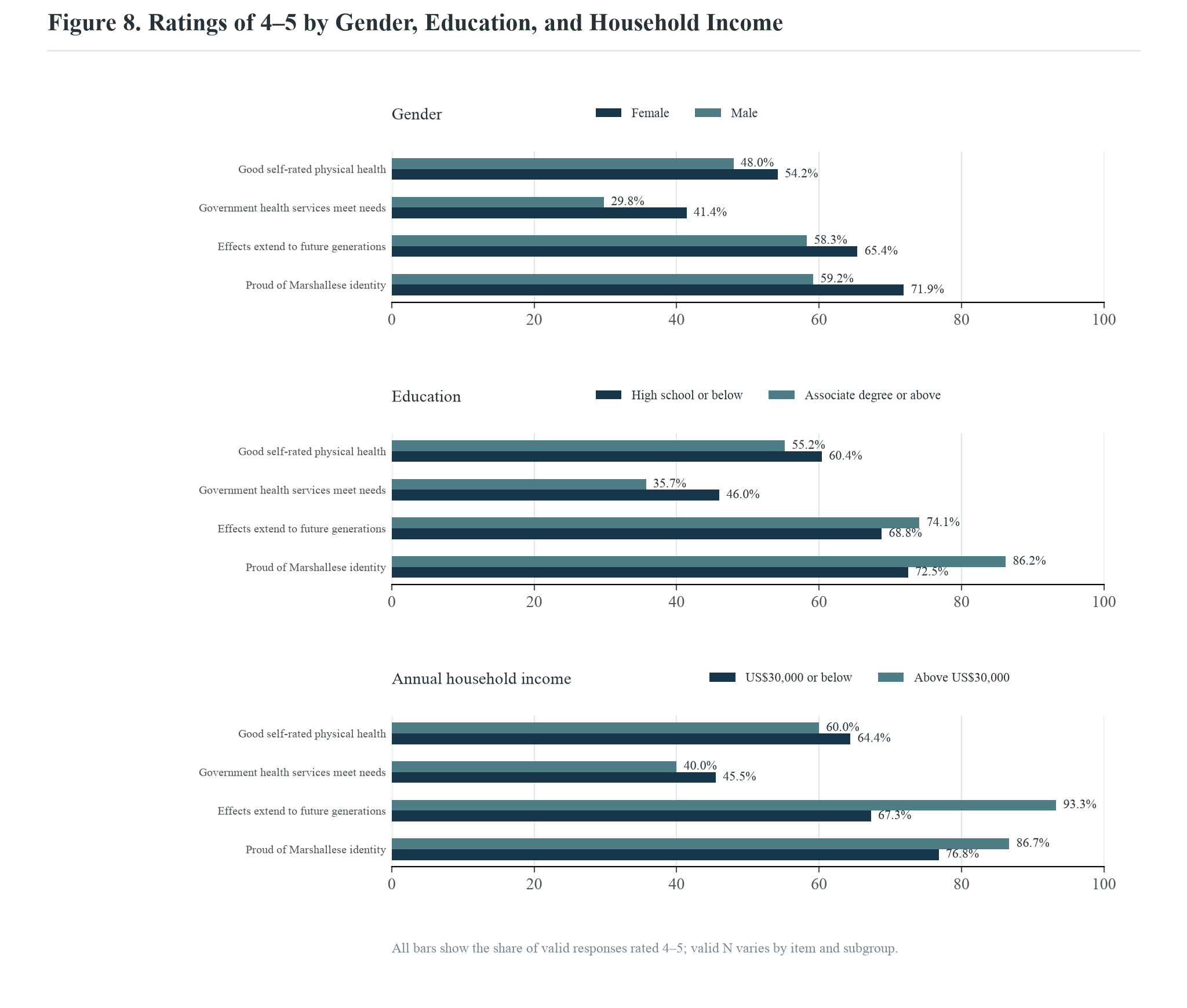
Figure 8. Proportion of Ratings of 4–5 among Indigenous/Native Respondents, Grouped by Gender, Education, and Household Income
Source: Cleaning and recalculation of the raw data from the 145 questionnaires
IXA Society Across Borders
Synthesizing the preceding analysis of the questionnaire data, we find that the 145 responses do not offer a simple answer to the question of “whether US policy has been positive or negative for the Marshall Islands,” but instead sketch a multi-layered picture of Marshallese social reality. The four different themes—employment, health, environment, and culture—are not mutually independent; rather, they jointly reflect the multiple characteristics that Marshallese society exhibits under decades of long-term US policy influence. The questionnaire cannot directly confirm a causal relationship between policy and social change but it clearly records how ordinary people understand the changes of the era in which they live as well as which real-world tensions are currently issues of shared, nationwide concern.
First, young people face a tension between their ideal choices and their realistic plans. Most Indigenous youth inwardly hope to live and work in the Marshall Islands in the future, with the proportion choosing the RMI as their ideal place of work and as their ideal place of settlement both exceeding sixty percent. Yet when the question turns to realistic plans for the next five–ten years, only 44.6% plan to work on the islands and nearly four in ten do not rule out the possibility of relocating overseas.
This indicates that most young residents have not abandoned their local identity, but that in their occupational choices, realistic considerations are markedly more cautious than ideals. The cross-border education, employment, and health-care channels that the United States has long provided, together with an institutional backdrop of free mobility, have opened up more possibilities for transnational development for the younger generation. “Staying in the homeland” and “seeking a living in the United States” are no longer an either-or choice but two life paths that they must weigh simultaneously when planning their futures. The tension presented by the questionnaire is, in essence, the younger generation’s oscillation between ethnic identity and real-world livelihood rather than simple population outflow.
Second, across the three dimensions of personal health, institutional protection, and environmental risk, the public’s evaluation of the impact of US policy displays clearly stratified characteristics. This can be summarized as three different levels of feeling: “perceived individual health—absence of institutional welfare—intergenerational risk anxiety.” Half of the respondents held a relatively positive evaluation of their own physical and mental health, yet their satisfaction with the official health system and workplace welfare protection continued to decline. This exposes the structural weakness of the local health-protection system. Even more striking is that, compared with their present personal ailments, most respondents displayed a deeper concern: that the health and environmental effects of nuclear testing might span generations, transmitting risk to their descendants.
This perception shows that the Marshallese people’s understanding of the consequences of US nuclear policy has long moved beyond a framework of mere medical assistance and economic compensation. It is now rising to the ethical level of cross-generational historical responsibility, the survival and safety of future generations, and the long-term development of the community. The collective memory of nuclear testing is migrating from the level of individual physical and mental health toward the dimensions of intergenerational responsibility and environmental justice. US policy not only continues to shape present-day daily life but has also profoundly reconstructed people’s anticipations of, and anxieties over, the health prospects and environmental safety of the next generation.
Third, the data on the cultural dimension show that long-term US policy has not weakened Marshallese residents’ cultural identity but that intergenerational cultural transmission is becoming a social issue of popular concern. The overwhelming majority of residents use the Marshallese language daily and take pride in being Marshallese; their sense of ethnic belonging and cultural roots remain firm. However, when the question turns further to “how to transmit culture to the next generation” and “whether Marshallese abroad can still maintain their traditions,” the proportion expressing optimism declines markedly. At the same time, although most people acknowledge that US support plays a certain positive role in protecting Marshallese culture, they generally perceive that local culture is undergoing outside impact.
These findings jointly point to a core shift: the crux of Marshallese cultural transmission is no longer merely “whether one identifies with one’s own culture,” but “how to continue traditions under a pattern of an ethnic group dispersed across the globe.” Long-term US policy has reshaped the Marshall Islands’ patterns of cross-border population movement and its environment of cultural transmission, producing on local culture the dual effects of both support and impact.
Fourth, the perception of policy impact is not entirely uniform across different social groups. The middle-aged group aged 40–59 perceives the long-term pain of the nuclear-testing legacy most deeply. Women are more concerned with intergenerational cultural transmission and community public participation; the highly educated have stronger identity attachment and higher expectations of public health care; and the high-income group is more concerned with the environmental risk to future generations. In addition, long-settled migrants generally affirm the continuity of Marshallese culture and display a relatively high intention to stay. Under the same policy backdrop, residents of different ages, genders, education levels, and life experiences have each formed their own distinct focal points of concern and evaluative perspectives.
Overall, the greatest value of this survey of 145 questionnaires lies not in delivering a black-and-white policy assessment, but in recording how ordinary Marshallese understand the social changes brought about by decades of intertwined internal and external policies. The public’s attitude toward US policy is a complex composite formed around health, compensation, migration, cultural protection, and sovereign identity—not a simple binary opposition of support versus opposition. In fact, the data shows that the impact of long-term US policy has already manifested across every level of the Marshall Islands including healthcare, education, culture, environmental governance, and population movement—and it has gradually settled into people’s everyday concerns about the future, their descendants, their communities, and their ethnic identity.
This survey does not provide a final answer, but it raises four core issues worthy of continued exploration: how young people balance attachment to their homeland with development abroad; how the public confronts the decades-long intergenerational risk of the nuclear legacy; how local culture achieves intergenerational transmission amid waves of population movement; and how diverse social groups jointly shape Marshallese society today. These four directions are both the central threads of the other documentary chapters of this book and a solid, concrete foundation of grassroots data for understanding the long-term bilateral interaction between the United States and the Marshall Islands.
The history of nuclear testing is a superimposition of intergenerational trauma and community memory whereas the assistance that followed is a complex entanglement of resource input, institutional dependence, and cultural reorganization. In this sense, the Marshall Islands constitutes a key field site for understanding how, under a postcolonial condition, a small island society maintains cultural continuity amid trauma, mobility, and institutional dependence.
Appendix
AStatistical Conventions, Missing Values, and Outlier Handling
The survey start and end dates, “July 2025 to March 2026,” are taken from the project’s original documentation. The overall sample consists of the 145 numbered records in Part A and Part B. Identity grouping is based on the self-reported “Indigenous or not” field in the background section: Y is assigned to the Indigenous Marshallese group, N to the migrant and non-native residents group, and other responses to “unspecified.”
Throughout the report, aggregated proportions count only valid responses of 1–5 as the sample. Blank entries, question marks, slashes, NA, and the “6 = no opinion” option are excluded from the denominator but are recorded separately in the original audit table. The meanings of the various marks are distinguished: a slash indicates “not applicable,” a question mark indicates a question that was not asked, was refused, or was ambiguously recorded, and 6 is an explicit “no opinion” option; their meanings are not the same.
Table A1. Outlier Handling and Sensitivity Testing
| Record No. | Corresponding item | Original recorded value | Handling | Sensitivity-test result |
|---|---|---|---|---|
| No.143 | Impact of environment and nuclear testing on mental health | 6 Strongly positively | Coded as missing | If treated as a rating of 5, the Indigenous group’s proportion of 4–5 ratings would change from 39/103 = 37.9% to 40/104 = 38.5% |
| No.46 | Frequently participate in Marshallese cultural practices | 4 Agree/5 Strongly Agree (circled both) | Uniformly recorded as a rating of 4 | If treated as a rating of 5, the proportion of 4–5 ratings would be unchanged; only the overall mean would rise slightly |
Note: The “6 Strongly positively” for No.143 exceeds the scale range and is treated as missing; if re-inspection of the original questionnaire confirms it as a rating of 5, the values can be updated as per the sensitivity results in the table.
Table A2. Counts of Missing-Data Types for Core Items, by Type (total sample of 145)
| Indicator | Valid 1–5 | Blank | ? mark | Slash | NA | 6 (no op.) |
|---|---|---|---|---|---|---|
| Government health services meet needs | 134 | 1 | 4 | 5 | 1 | 0 |
| Impact of environment and nuclear testing on mental health | 124 | 1 | 2 | 10 | 1 | 7 |
| Impact of nuclear testing on personal health to date | 117 | 2 | 5 | 11 | 1 | 9 |
| Such impacts will continue to future generations | 121 | 2 | 4 | 10 | 1 | 7 |
| Believe Marshallese culture is under threat | 128 | 2 | 9 | 5 | 1 | 0 |
| Proud of Marshallese identity | 128 | 3 | 6 | 7 | 1 | 0 |
Note: Table A2 counts all 145 Part A records. The missing-data types for the full 32 items are provided separately in a standalone CSV data table.
BBasic Sample Background and Population-Mobility Statistics
Table B1. Overview of Overall Sample Structure
| Classification dimension | Population category | Count | Share of total sample |
|---|---|---|---|
| Identity classification | Indigenous Marshallese | 111 | 76.6% |
| Migrant / non-native residents | 33 | 22.8% | |
| Identity unspecified | 1 | 0.7% | |
| Sex | Female | 71 | 49.0% |
| Male | 71 | 49.0% | |
| Other sex / not reported | 3 | 2.1% | |
| Age | Under 18, minors | 11 | 7.6% |
| 18–39, young adults | 94 | 64.8% | |
| 40–59, middle-aged | 31 | 21.4% | |
| 60 and above, older adults | 6 | 4.1% | |
| Age missing | 3 | 2.1% | |
| Education level | No formal education | 6 | 4.1% |
| Primary / lower secondary | 12 | 8.3% | |
| High school | 43 | 29.7% | |
| Associate / some college | 41 | 28.3% | |
| Bachelor’s | 6 | 4.1% | |
| Graduate and above | 3 | 2.1% | |
| Education not reported | 34 | 23.4% | |
| Annual household income | US$30,000 and below | 79 | 54.5% |
| US$30,001–58,020 | 14 | 9.7% | |
| US$58,021–94,000 | 8 | 5.5% | |
| US$94,001–153,000 | 3 | 2.1% | |
| Above US$153,000 | 1 | 0.7% | |
| Income not reported | 40 | 27.6% |
Table B2. Distribution of Birthplace, Nationality, Occupation, Marital Status, Children, and Co-Residents
| Classification dimension | Category | Count | Share |
|---|---|---|---|
| Birthplace | Within RMI | 107 | 73.8% |
| Philippines | 12 | 8.3% | |
| United States | 9 | 6.2% | |
| Birthplace not reported | 7 | 4.8% | |
| Other overseas | 4 | 2.8% | |
| Kiribati | 2 | 1.4% | |
| Taiwan | 2 | 1.4% | |
| Fiji | 1 | 0.7% | |
| Mexico | 1 | 0.7% | |
| Nationality | Marshallese | 125 | 86.2% |
| Philippine | 14 | 9.7% | |
| Not reported | 2 | 1.4% | |
| Kiribati | 1 | 0.7% | |
| Fiji | 1 | 0.7% | |
| Japan | 1 | 0.7% | |
| United States | 1 | 0.7% | |
| Occupation | Not reported | 63 | 43.4% |
| Other detailed occupations | 18 | 12.4% | |
| Service, retail, and food service | 14 | 9.7% | |
| Students | 13 | 9.0% | |
| Skilled and manual labor | 13 | 9.0% | |
| Unemployed / full-time homemaker | 8 | 5.5% | |
| Government and public sector | 7 | 4.8% | |
| Education, healthcare, and professional positions | 5 | 3.4% | |
| Business and finance | 4 | 2.8% | |
| Marital status | Single | 71 | 49.0% |
| Married | 64 | 44.1% | |
| Widowed | 4 | 2.8% | |
| Separated/Divorced | 4 | 2.8% | |
| Not reported | 2 | 1.4% | |
| Number of children | 1–2 | 41 | 28.3% |
| 3–4 | 34 | 23.4% | |
| Not reported | 28 | 19.3% | |
| No children | 27 | 18.6% | |
| 5 or more | 15 | 10.3% | |
| Co-residents | Parents/relatives | 54 | 37.2% |
| Partner/spouse | 40 | 27.6% | |
| Living alone | 17 | 11.7% | |
| Partner and children | 10 | 6.9% | |
| Friends/others | 10 | 6.9% | |
| Partner, children, and parents/relatives | 7 | 4.8% | |
| Children | 5 | 3.4% | |
| Children and parents/relatives | 1 | 0.7% | |
| Not reported | 1 | 0.7% |
Table B3. History of Overseas Travel, Clan, Intended Migration Destination, and Migrants’ Years of Local Residence
| Statistical item | Category | Count | Valid N | Share |
|---|---|---|---|---|
| Number of countries/regions visited, Indigenous group | 0 countries/regions | 71 | 111 | 64.0% |
| 1 country/region | 14 | 111 | 12.6% | |
| 3 or more | 12 | 111 | 10.8% | |
| Not reported | 7 | 111 | 6.3% | |
| 2 countries/regions | 7 | 111 | 6.3% | |
| Intended migration destination, Indigenous group aged | Not reported | 54 | 74 | 73.0% |
| 18–39 | United States | 15 | 74 | 20.3% |
| Japan | 2 | 74 | 2.7% | |
| Other | 2 | 74 | 2.7% | |
| Guam | 1 | 74 | 1.4% | |
| Years of residence in RMI, migrant and non-native | 11–20 years | 8 | 33 | 24.2% |
| group | Unspecified | 6 | 33 | 18.2% |
| Less than 1 year | 5 | 33 | 15.2% | |
| 1–5 years | 5 | 33 | 15.2% | |
| 21 years or more | 4 | 33 | 12.1% | |
| 6–10 years | 4 | 33 | 12.1% | |
| Born locally | 1 | 33 | 3.0% | |
| Clan information, Indigenous Marshallese | Identifiable and fully completed | 57 | 111 | 51.4% |
| Not reported / unidentifiable | 54 | 111 | 48.6% |
CFull Item-Level Banded Scale Distributions
Table C1. Three-Band Score Distribution for Main Part A Items, Indigenous Marshallese Group
| Indicator | Scale | Valid N | 4–5 (n) | 4–5 (%) | 3 (n) | 3 (%) | 1–2 (n) | 1–2 (%) |
|---|---|---|---|---|---|---|---|---|
| Good self-rated physical health | Agreement (Likert) scale | 111 | 57 | 51.4% | 35 | 31.5% | 19 | 17.1% |
| Good self-rated mental health | Agreement (Likert) scale | 109 | 56 | 51.4% | 31 | 28.4% | 22 | 20.2% |
| Government health services meet needs | Agreement (Likert) scale | 107 | 39 | 36.4% | 41 | 38.3% | 27 | 25.2% |
| Family provides support on health issues | Agreement (Likert) scale | 110 | 57 | 51.8% | 34 | 30.9% | 19 | 17.3% |
| Community provides support on health issues | Agreement (Likert) scale | 109 | 52 | 47.7% | 36 | 33.0% | 21 | 19.3% |
| Workplace benefits help maintain health | Agreement (Likert) scale | 106 | 43 | 40.6% | 37 | 34.9% | 26 | 24.5% |
| Impact of environment and nuclear testing on mental health | Graded impact scale | 103 | 39 | 37.9% | 28 | 27.2% | 36 | 35.0% |
| Impact of environment and nuclear testing on physical health | Graded impact scale | 101 | 39 | 38.6% | 28 | 27.7% | 34 | 33.7% |
| Impact on atoll community relations and cultural pride | Graded impact scale | 102 | 51 | 50.0% | 25 | 24.5% | 26 | 25.5% |
| Condition of land and water environment | Graded impact scale | 104 | 44 | 42.3% | 34 | 32.7% | 26 | 25.0% |
| Impact of environmental change on daily life | Graded impact scale | 104 | 43 | 41.3% | 36 | 34.6% | 25 | 24.0% |
| Impact of nuclear testing on personal health to date | Graded impact scale | 99 | 46 | 46.5% | 30 | 30.3% | 23 | 23.2% |
| Such impacts will continue to future generations | Graded impact scale | 102 | 63 | 61.8% | 19 | 18.6% | 20 | 19.6% |
| Personal responsibility to maintain a better environment | Agreement (Likert) scale | 111 | 73 | 65.8% | 23 | 20.7% | 15 | 13.5% |
| Community divided by environmental disagreements | Agreement (Likert) scale | 110 | 50 | 45.5% | 28 | 25.5% | 32 | 29.1% |
| Frustration at inability to influence environmental decisions | Agreement (Likert) scale | 109 | 52 | 47.7% | 35 | 32.1% | 22 | 20.2% |
| Unwelcome changes weaken sense of belonging | Agreement (Likert) scale | 110 | 47 | 42.7% | 41 | 37.3% | 22 | 20.0% |
| Use Marshallese language daily | Agreement (Likert) scale | 109 | 72 | 66.1% | 22 | 20.2% | 15 | 13.8% |
| Frequently participate in Marshallese cultural practices | Agreement (Likert) scale | 108 | 64 | 59.3% | 26 | 24.1% | 18 | 16.7% |
| Believe Marshallese culture is under threat | Agreement (Likert) scale | 104 | 55 | 52.9% | 27 | 26.0% | 22 | 21.2% |
| Believe US support helps protect Marshallese culture | Agreement (Likert) scale | 111 | 63 | 56.8% | 29 | 26.1% | 19 | 17.1% |
| Strong sense of cultural belonging to Marshallese culture | Agreement (Likert) scale | 109 | 72 | 66.1% | 23 | 21.1% | 14 | 12.8% |
| Know clearly how to transmit culture to the next generation | Agreement (Likert) scale | 108 | 60 | 55.6% | 33 | 30.6% | 15 | 13.9% |
| Believe overseas Marshallese can still maintain traditions | Agreement (Likert) scale | 109 | 55 | 50.5% | 38 | 34.9% | 16 | 14.7% |
| Actively learn about Marshallese culture | Agreement (Likert) scale | 110 | 66 | 60.0% | 31 | 28.2% | 13 | 11.8% |
| Proud of Marshallese identity | Agreement (Likert) scale | 108 | 71 | 65.7% | 24 | 22.2% | 13 | 12.0% |
| Clearly understand Marshallese identity | Agreement (Likert) scale | 108 | 72 | 66.7% | 23 | 21.3% | 13 | 12.0% |
Note: For the graded impact scale, 1–2 = negative impact, 3 = neutral / no impact, 4–5 = positive impact; for the agreement (Likert) scale, 4–5 = agree / strongly agree.
Table C2. Score Distribution for Part B Items, Migrant and Non-Native Residents Group
| Indicator | Valid N | 4–5 (n) | 4–5 (%) | 3 (n) | 3 (%) | 1–2 (n) | 1–2 (%) |
|---|---|---|---|---|---|---|---|
| RMI cultural traditions are well preserved | 25 | 15 | 60.0% | 9 | 36.0% | 1 | 4.0% |
| RMI culture has grown stronger in recent years | 25 | 15 | 60.0% | 7 | 28.0% | 3 | 12.0% |
| RMI culture has unity and continuity | 25 | 21 | 84.0% | 4 | 16.0% | 0 | 0.0% |
| Frequently participate in community activities | 25 | 14 | 56.0% | 9 | 36.0% | 2 | 8.0% |
| Will continue to engage with RMI language and customs in the future | 25 | 17 | 68.0% | 8 | 32.0% | 0 | 0.0% |
| Willing to stay long-term in RMI in the future (ratings of 3–5) | 26 | 13 | 50.0% | 8 | 30.8% | 5 | 19.2% |
Note: The full cross-group comparisons, reasons for migration, occupational classifications, and all missing-data types have been exported separately into a CSV data table; all summary tables exclude respondents’ names, contact information, and other identifiable personal-privacy information.
About the Marshall Islands
Between 1946 and 1958 the United States conducted nuclear tests at Bikini and Enewetak. Rongelap and Utrik were exposed to fallout from the Bravo test in 1954.
The Republic of the Marshall Islands comprises 29 atolls and more than 1,200 islands, at a mean elevation of about two metres above sea level.
- Atolls
- 29
- Islands
- 1,200+
- Mean elevation
- About 2 metres above sea level
- Location
- Central Pacific, roughly halfway between Hawaiʻi and Australia
| ID | Station | Position | Note |
|---|---|---|---|
| ENE | Enewetak | 11°30′N 162°20′E | Test site 1948–58 |
| BIK | Bikini | 11°36′N 165°23′E | Test site 1946–58 |
| RON | Rongelap | 11°10′N 166°51′E | Fallout 1954 |
| UTR | Utrik | 11°14′N 169°51′E | Fallout 1954 |
| KWA | Kwajalein | 09°11′N 167°28′E | — |
| MAJ | Majuro | 07°05′N 171°23′E | Fieldwork station |
| SEA | Seattle | 47°37′N 122°20′W | Fieldwork station |
Afterword & Acknowledgments
The accounts in this book are not fiction, and they do not end neatly. They belong to people still deciding where to live, how to care for relatives, what to teach their children, and whether a return is possible. Their lives differ too much to form a single story of departure. What they share, without exception, is pride in being Marshallese—and a family divided by the same ocean. Read together, their accounts reveal a common condition: the most consequential choices are made within circumstances they did not create.
The surveys made that condition visible through a series of tensions. Younger respondents often expressed deep attachment to the Marshall Islands while imagining their education or careers abroad. Many described their present health positively while worrying about the scarcity of medical care at home and the possibility that nuclear harm might reach future generations. This concern showed up in the numbers too: among Indigenous respondents, 45.9 percent agreed that nuclear testing continued to affect their personal health, and 61.4 percent believed its effects would continue into future generations. Strong pride in Marshallese identity coexisted with concerns that children were losing fluency, traditional skills, and an everyday connection to island life.
Employment, health, environment, and culture did not appear as separate problems. A shortage of doctors can turn a temporary trip into permanent settlement; a child’s education can keep an entire household abroad; low wages and high prices can make return economically impossible even when the desire remains. As working-age relatives establish themselves in the United States, they become intermediaries for elders seeking treatment and young people pursuing education. Leaving itself required courage because work, kinship, land, and obligation remained rooted in the islands. The choice was seldom between loyalty and betrayal, but between different forms of responsibility and different kinds of loss.
The interviews changed my own understanding of choice itself. I began by looking at departure—why people left, why so many stayed away. I came to see it as only the visible beginning: someone must also receive new arrivals, send money home, organize a funeral from afar, and teach a child how to belong to a place they may seldom see. Migration requires the constant renegotiation of obligation across borders. In this sense, transnationalism is not an abstract theory but a way of life: transmigrants remain embedded in social worlds spanning the Marshall Islands and the United States, and culture lives in the work of sustaining those worlds. On the islands it could be embedded in land, kinship, and the rhythms of ordinary life; abroad, speaking Marshallese at home, preparing island food, wearing a handwoven skirt, or building a canoe becomes a deliberate act—and the deliberateness cuts both ways, weakening transmission for some and sharpening, for others, the sense of what they wish to carry forward.
Epeli Hau‘ofa’s description of the Pacific as a “sea of islands” offers another way to understand these transnational lives. The ocean is not simply a distance separating migrants from home, but a connective space across which people, money, care, memory, and obligation continue to move. Marshallese transmigrants therefore do not leave one bounded society and enter another;1 they inhabit social worlds spanning the islands and the United States, sustaining forms of belonging that are geographically dispersed without being severed.
However, the language of resilience can turn endurance into an excuse for continued neglect. Marshallese families have shown extraordinary resourcefulness in sustaining one another across the Pacific, but resourcefulness does not repair contaminated land, build a medical system, or settle unresolved claims—and to recognize the labor of survival is also to ask why so much of it has been left to the people most burdened by that history. Return, likewise, has more meanings than resettlement. For descendants of the displaced it may be impossible as physical residence and still remain powerful as an ethical claim: the homeland persisting not as a destination but as a set of obligations—among the living, and to those who came before them.
Across small island developing states (SIDS), colonial legacies, military power, climate change, economic dependency, population dispersal, and intergenerational cultural rupture increasingly meet in the same household. In global climate discourse, the Marshall Islands has often been cast as a warning for the rest of the world.2 Yet the wider significance of the lives recorded here lies not in what they forecast for others, but in exposing a question with much wider reach: what becomes of responsibility when the states that contributed most to a crisis are far better protected from its consequences than the people asked to endure it?
I cannot answer that question on behalf of the people who spoke with me. My responsibility has been more limited and more exacting: to listen carefully, distinguish testimony from proof, preserve disagreement, and resist making private lives serve a conclusion they did not choose. The authority of this book does not come from my having asked the questions. It comes from the time, candor, and trust with which others answered them.
The tide has never asked permission before entering Marshallese land, bodies, and memory. Yet to live at the tide’s mercy is not to belong to the tide. The exodus continues, but so do the voices that cross it—voices the water has carried and has not carried away.
Notes
- 1Epeli Hau‘ofa, “Our Sea of Islands,” The Contemporary Pacific 6, no. 1 (Spring 1994): 147–161, esp. 152–54, 156–60, https://www.history.ucsb.edu/wp-content/uploads/HauofaOurSeaOfIslands.pdf; Nina Glick Schiller, Linda Basch, and Cristina Szanton Blanc, “From Immigrant to Transmigrant: Theorizing Transnational Migration,” Anthropological Quarterly 68, no. 1 (January 1995): 48–63, esp. 48, 52–58, https://doi.org/10.2307/3317464.
- 2Autumn S. Bordner, Caroline E. Ferguson, and Leonard Ortolano, “Colonial Dynamics Limit Climate Adaptation in Oceania: Perspectives from the Marshall Islands,” Global Environmental Change 61 (March 2020): 102054, 1, 5–8, https://doi.org/10.1016/j.gloenvcha.2020.102054; Hamilton and O’Gorman, “Seeing Experimental Imperialism in the Nuclear Pacific.”
Acknowledgments
This book would not exist without the generosity of many people. I have other debts to acknowledge as well. I am deeply grateful to Eric and to the organizers and friends within Seattle’s Marshallese community who shared their knowledge, introduced me to others, and made the fieldwork possible. I thank my parents for accompanying me to Seattle and for supporting the project. I thank my younger brother, Bright, for assisting me in building the book’s website through which these stories and findings can reach readers far beyond these pages.
Above all, I thank every person who completed a survey and every interviewee who trusted me with an honest account of a life. Their responses contained family histories, painful memories, humor, and hopes still taking shape. I hope readers remember the Marshall Islands not only beneath a mushroom cloud or behind a rising sea, but through people whose lives exceed both what has been done to their country and what has been predicted for it.
All proceeds from this book will be donated to Marshallese-led nonprofit organizations and to the Nuclear Threat Initiative (NTI) supporting community health, cultural preservation, education, and nuclear justice. It is my deepest hope that these voices continue to be heard, and that the stories shared within these pages carry their own weight into a future that remembers.